



What's Happening?
Illinois coach Brad Underwood has successfully integrated Eastern European players into his team, contributing significantly to their performance in the NCAA Tournament. The Illini, led by Underwood, are set to face Iowa in the South Region final, with
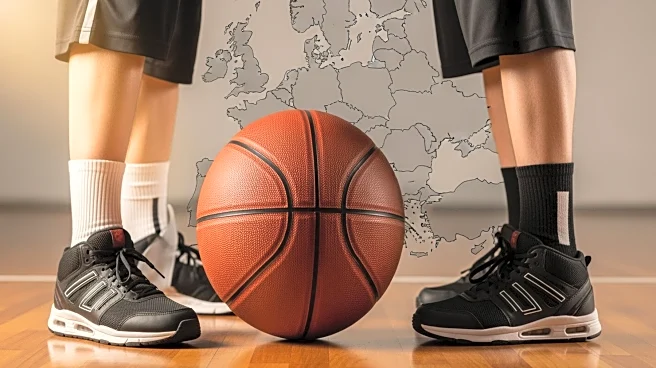
a chance to reach the Final Four. Underwood's strategy includes recruiting players from Eastern Europe, such as Croatian twins Zvonimir and Tomislav Ivisic, Montenegrin forward David Mirkovic, and Serbian guard Mihailo Petrovic. This approach has been facilitated by the name, image, and likeness (NIL) era, allowing players to earn money while pursuing a path to the NBA. The presence of these players has not only enhanced the team's performance but also eased their transition to the U.S., providing a sense of familiarity and support.
Why It's Important?
The recruitment of Eastern European players by Illinois highlights a growing trend in college basketball, where international talent is increasingly sought after. This strategy not only diversifies the team but also brings different playing styles and skills, enriching the overall competitiveness of college basketball. The success of Illinois in the NCAA Tournament underscores the potential benefits of international recruitment, which could lead to more U.S. colleges adopting similar strategies. This shift could impact the dynamics of college basketball, making it more inclusive and globally representative. Additionally, the NIL era provides new opportunities for international players to balance professional aspirations with academic pursuits, potentially increasing the appeal of U.S. colleges to overseas talent.
What's Next?
As Illinois continues its journey in the NCAA Tournament, the focus will be on how the team leverages its diverse roster to achieve success. The upcoming match against Iowa will test the effectiveness of Underwood's recruitment strategy. Should Illinois advance to the Final Four, it could further validate the approach of integrating international players into college teams. This success might encourage other colleges to explore similar recruitment strategies, potentially leading to a broader shift in college basketball recruitment practices. The performance of Eastern European players in high-stakes games will be closely watched, as it could influence future recruitment decisions and the overall landscape of college basketball.
Beyond the Headlines
The integration of Eastern European players into Illinois' basketball team raises questions about cultural adaptation and the role of sports in bridging cultural divides. The players' experiences highlight the importance of support systems in facilitating their transition to a new country and culture. This development also points to the broader implications of globalization in sports, where talent mobility is increasingly common. The success of these players could inspire more international athletes to pursue opportunities in the U.S., potentially leading to a more diverse and culturally rich sports environment. Additionally, the NIL era's impact on recruitment strategies could redefine the relationship between college sports and professional aspirations, offering new pathways for athletes worldwide.