


What's Happening?
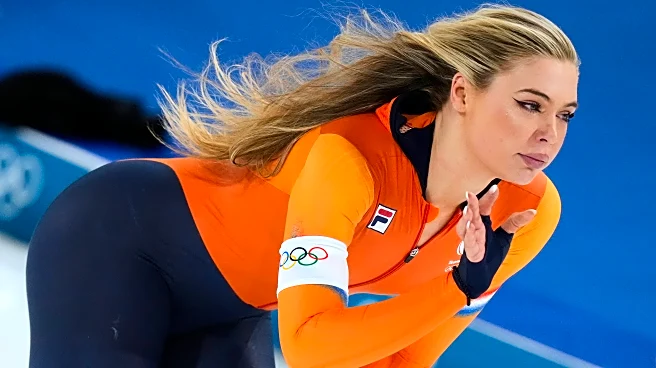
As the 2026 Winter Olympics take place in Milan and Cortina, the pressure on athletes to perform at their best is immense. Vikram Chib, a biomedical engineer and neuroscientist at Johns Hopkins University, studies how the brain responds to rewards and pressure. He explains that while rewards can enhance performance, they can also lead to increased pressure, which may cause athletes to 'choke' under stress. This phenomenon is not limited to Olympians, as the brain's response to pressure and rewards is a universal human experience.
Why It's Important?
Understanding the neuroscience behind performance under pressure is vital for athletes, coaches, and anyone facing high-stakes situations. Insights from Chib's research can inform training methods and mental preparation
strategies to help individuals manage stress and optimize performance. This knowledge is particularly relevant during the Olympics, where the stakes are high, and the pressure to succeed is intense. By exploring these dynamics, stakeholders can develop better support systems for athletes and others in pressure-filled environments.