






What's Happening?
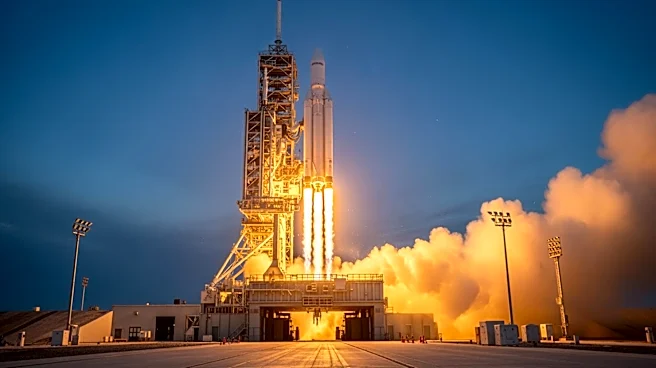
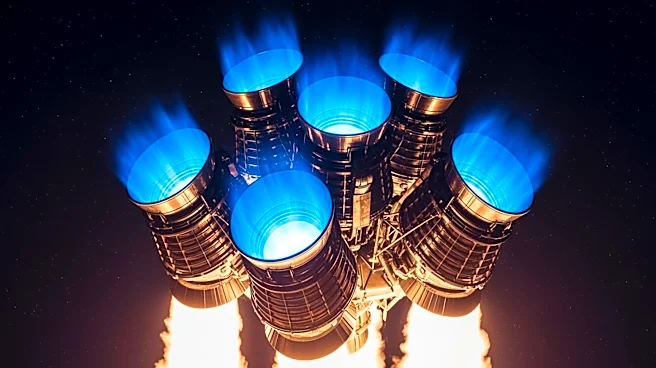
SpaceX is set to launch the Starship V3, the world's most powerful rocket, following a successful static fire test of 33 Raptor 3 engines. This marks a significant milestone in SpaceX's development of reusable super-heavy rockets. The launch is scheduled
for May 12, 2026, from Starbase, Boca Chica, Texas. The Raptor 3 engines, which provide more thrust and efficiency than previous versions, are part of the Block 3 configuration, a complete evolution of the original Starship architecture. This development positions SpaceX ahead of competitors like Blue Origin, which has yet to advance past initial orbital tests with its New Glenn rocket.
Why It's Important?
The successful launch of Starship V3 could revolutionize the satellite industry by drastically reducing the cost of sending payloads into orbit. SpaceX estimates costs could drop below $100 per kilogram, compared to the $50,000 per kilogram charged by the space shuttle. This reduction could make previously unfeasible missions routine, benefiting satellite constellations, scientific missions, and commercial payloads. Additionally, NASA has contracted SpaceX to use a version of Starship for the Artemis program's lunar landings, with the first crewed descent planned for 2027. The success of Starship V3 is crucial for these future missions and for SpaceX's goal of uncrewed Mars landings by 2028.
What's Next?
The upcoming launch on May 12 is contingent on final FAA licensing, with backup windows on May 13 and 14. Weather conditions on the Texas coast could also impact the launch schedule. SpaceX plans to conduct a deliberate splashdown for this flight to validate the new V3 architecture before resuming capture attempts. The company aims to increase its launch pace to one flight per week by the end of 2026, which could influence its IPO plans and private valuation. The success of this launch could also attract partnerships with international suppliers and educational institutions interested in propulsion technology.