
What's Happening?
Providence, Rhode Island, and Salt Lake City, Utah, present contrasting luxury housing markets, shaped by their unique histories and geographic locations. According to a report from Realtor.com, luxury properties
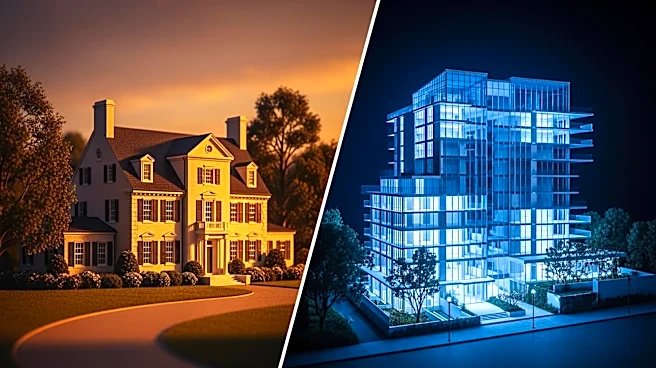
in Providence command higher prices than those in Salt Lake City, despite the latter offering larger homes for the same price range. In April, the entry point for luxury homes in Providence was $1.64 million, significantly higher than Salt Lake City's $1.24 million. The report highlights that Providence's luxury market is driven by its historical architecture and cultural infrastructure, while Salt Lake City's market benefits from its modern, spacious homes and proximity to outdoor activities. Since 2016, luxury prices in Providence have surged by 83%, compared to Salt Lake City's 48% growth. Despite higher costs, luxury properties in Providence sell faster due to limited inventory and high demand from buyers in more expensive metros.
Why It's Important?
The differences in these luxury markets reflect broader economic and cultural trends in the U.S. Providence's market is buoyed by its historical and cultural appeal, attracting buyers from wealthier Northeastern cities. This demand, coupled with limited inventory, drives up prices and speeds up sales. Conversely, Salt Lake City's market is expanding due to its appeal as a tech hub and its availability of larger, modern homes at lower prices. This growth is indicative of the broader trend of tech industry expansion into the Mountain West, reshaping local economies and housing markets. The contrasting dynamics between these two cities highlight the diverse factors influencing luxury real estate across the country.
What's Next?
As demand continues to grow in both markets, Providence may face challenges in maintaining its inventory due to its geographic and historical constraints. This could lead to further price increases and competition among buyers. In Salt Lake City, the availability of land for development suggests potential for continued growth and expansion of its luxury market. However, as the tech industry continues to attract professionals to the area, there may be increased pressure on housing supply, potentially driving up prices. Both markets will need to navigate these challenges to balance growth with affordability.