



What's Happening?
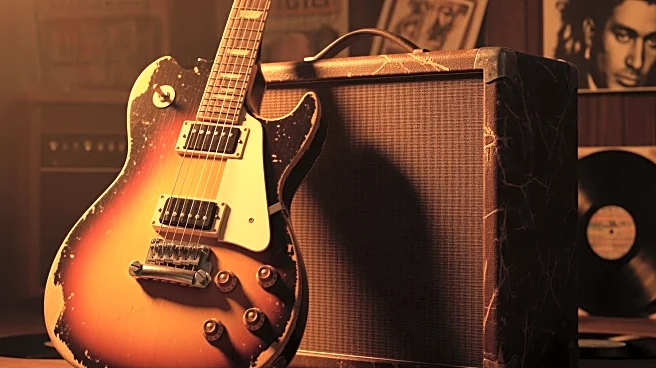
The Amiri Fall 2026 fashion show in Paris featured a set designed to evoke a 1970s house party in Laurel Canyon, a Los Angeles neighborhood known for its rock music scene. The show, orchestrated by designer Mike Amiri, included a faux library backdrop and cozy armchairs, creating an intimate atmosphere reminiscent of the era. Notable attendees included actor Jeff Goldblum and his wife Emilie Livingston, who had recently performed at the Troubadour nightclub in L.A. The collection showcased a blend of vintage styles, with Western-style suits inspired by icons like Johnny Cash and Elvis Presley, featuring metal-tipped lapels and floral embroidery. The line also included crystal-embroidered cardigans and washed leather jackets, appealing to those
seeking unique, emotionally resonant fashion.
Why It's Important?
Amiri's show highlights the ongoing influence of vintage and rock culture in contemporary fashion, particularly the appeal of individuality and authenticity. By drawing inspiration from the 1970s L.A. music scene, Amiri taps into a cultural nostalgia that resonates with both fashion enthusiasts and those with an appreciation for music history. This approach not only reinforces Amiri's brand identity as a purveyor of 'California cool' but also underscores a broader trend in fashion where emotional connection and storytelling are becoming increasingly important. The collection's success could influence other designers to explore similar themes, potentially impacting fashion trends and consumer preferences.
What's Next?
Amiri's continued exploration of vintage and rock-inspired themes may lead to further collaborations with musicians and artists, enhancing the brand's cultural cachet. The suggestion to incorporate live music elements into future shows could create a more immersive experience, attracting a wider audience and media attention. As the fashion industry evolves, Amiri's approach may inspire other designers to integrate storytelling and cultural references into their collections, potentially shaping future fashion narratives.