






What's Happening?
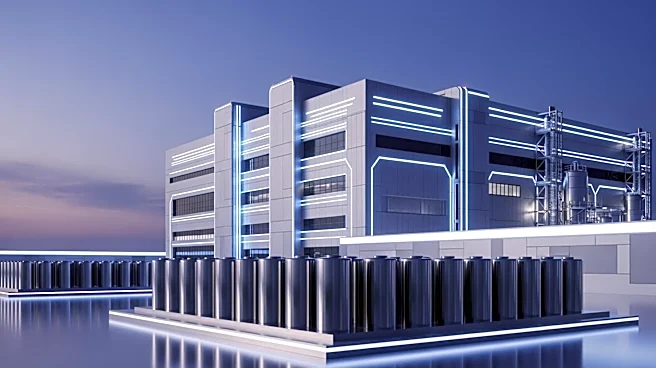
The UK government has announced a £380 million grant to support the construction of the Agratas car battery gigafactory in Somerset. The facility, managed by Sir Robert McAlpine, is part of a £4 billion project aimed at advancing battery manufacturing
in the UK. Earl Wiggins, Vice President of Manufacturing Operations for Agratas, emphasized the importance of this investment in achieving net zero emissions and enhancing the UK's leadership in battery production. The gigafactory will produce battery cells for Jaguar Land Rover, with over 2,200 workers expected on-site within the next year. Severfield is handling the main steel package, while Costain has secured a £123 million contract to design and build a new motorway junction on the M5 to serve the plant.
Why It's Important?
The establishment of the Agratas gigafactory is a significant step towards bolstering the UK's battery manufacturing capabilities, crucial for the automotive industry's transition to electric vehicles. This investment aligns with the UK's net zero goals, potentially reducing carbon emissions and fostering sustainable energy solutions. The gigafactory is expected to create thousands of jobs, contributing to economic growth in Somerset and surrounding areas. By supporting Jaguar Land Rover, the facility strengthens the UK's automotive sector, enhancing its competitiveness in the global market. The project also underscores the government's commitment to infrastructure development, with the new motorway junction facilitating efficient logistics and transportation.
What's Next?
As construction progresses, the focus will be on completing the gigafactory and the associated infrastructure, including the M5 motorway junction. The project is likely to attract further investment and partnerships, potentially expanding its impact on the UK's battery manufacturing industry. Stakeholders, including local communities and environmental groups, may engage in discussions about the project's long-term benefits and challenges. The gigafactory's success could influence future government policies on renewable energy and industrial development, setting a precedent for similar initiatives across the country.