
What's Happening?
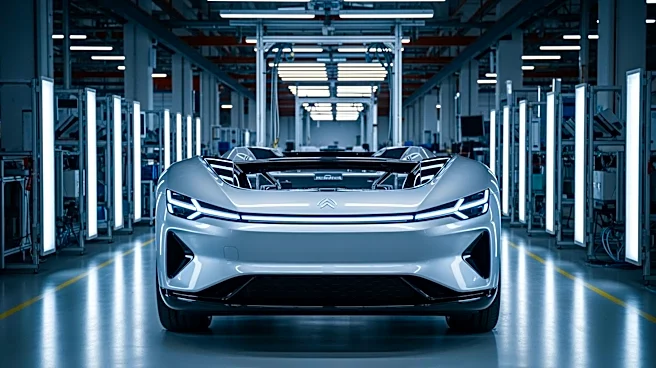
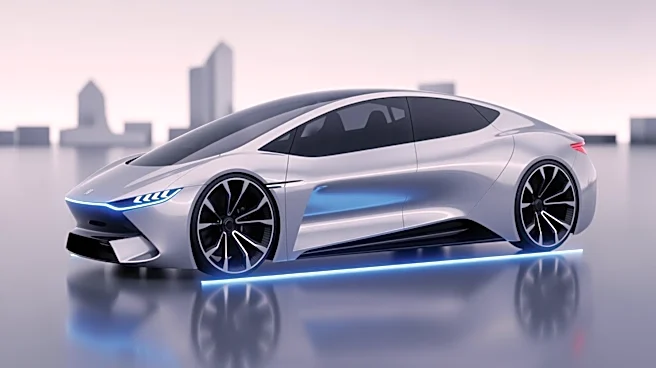
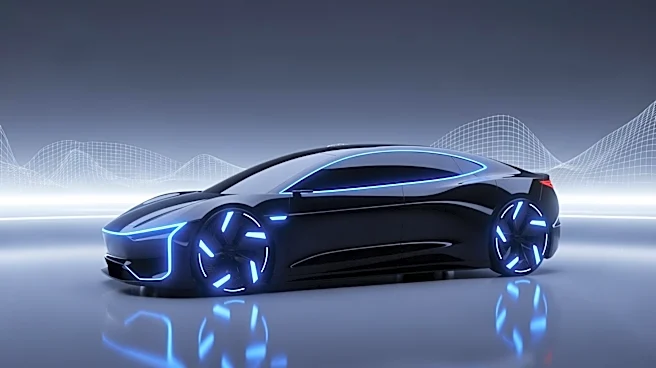
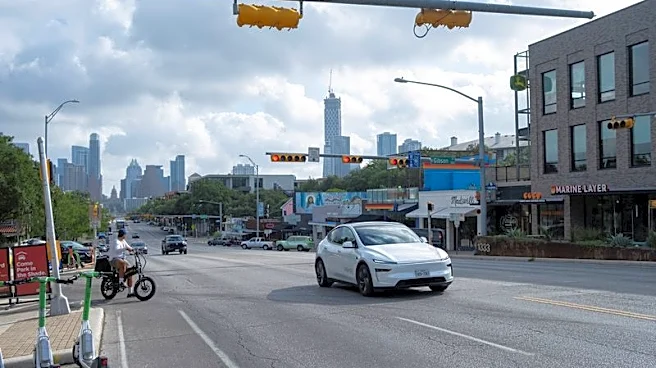
Tesla has announced the commencement of mass production for its autonomous vehicle, the Cybercab, at its Gigafactory in Texas. This development marks a significant milestone for Tesla as it transitions from testing to full-scale production of vehicles
designed without traditional driver controls such as steering wheels and pedals. The Cybercab is part of Tesla's broader strategy to expand its autonomous ride-hailing service. Despite the U.S. National Highway Traffic Safety Administration's (NHTSA) existing cap of 2,500 autonomous vehicles per manufacturer per year, Tesla's Vice President of Vehicle Engineering, Lars Moravy, confirmed that this limit does not apply to the Cybercab. Tesla appears to be self-certifying the vehicle under the Federal Motor Vehicle Safety Standards (FMVSS), allowing it to produce the Cybercab without the need for traditional controls.
Why It's Important?
The production of the Cybercab represents a pivotal shift in the automotive industry towards fully autonomous vehicles. By bypassing the NHTSA's vehicle cap, Tesla is setting a precedent for other manufacturers in the autonomous vehicle space. This move could accelerate the adoption of autonomous vehicles in the U.S., potentially transforming urban transportation and reducing the need for human drivers. The expansion of Tesla's Robotaxi service, which currently operates in cities like Dallas and Houston, could lead to significant changes in the ride-hailing market, challenging traditional services like Uber and Lyft. The success of the Cybercab could also bolster Tesla's position as a leader in autonomous vehicle technology, influencing regulatory frameworks and public acceptance of driverless cars.
What's Next?
With the production of the Cybercab ramping up, Tesla is likely to expand its autonomous ride-hailing service to more cities across the U.S. The company may also face scrutiny from regulators and competitors as it continues to push the boundaries of autonomous vehicle technology. Tesla's approach to self-certification under FMVSS could prompt discussions about the adequacy of current safety standards for autonomous vehicles. As Tesla integrates the Cybercab into its Robotaxi network, the company will need to ensure the reliability and safety of its Unsupervised Full Self-Driving software to gain public trust and regulatory approval.