






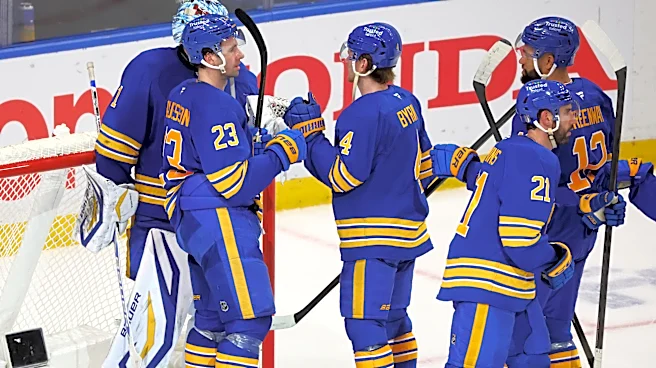

What's Happening?
During a recent game against the Boston Bruins, Buffalo Sabres player Tage Thompson was involved in a melee that resulted in a misconduct penalty. Initially, it appeared that Thompson's night was over as he left the ice and was not seen in the penalty box
or on the bench. However, with about 90 seconds left in the game, Thompson returned to the ice, clarifying that he had received a 10-minute misconduct penalty rather than a game misconduct, which would have resulted in an ejection. This allowed him to rejoin the game after serving the penalty time. The Sabres were attempting a late rally, having cut the Bruins' lead from 4-0 to 4-2, but ultimately could not secure a win.
Why It's Important?
The incident highlights the complexities and nuances of hockey penalties, which can sometimes lead to confusion among fans and commentators. Misconduct penalties in hockey can vary, and understanding these differences is crucial for accurate game analysis. For the Sabres, Thompson's return was significant as they were in the midst of a comeback attempt. His presence on the ice could have potentially influenced the game's outcome, underscoring the importance of key players in critical moments. This event also serves as a reminder of the strategic elements involved in managing player penalties and game dynamics.