
What's Happening?
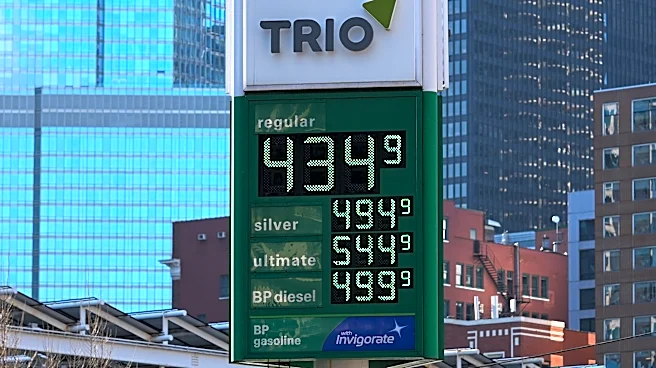
Despite a recent ceasefire agreement between the U.S. and Iran, fuel prices in the United States remain high, with experts warning that relief at the pumps may not be immediate. According to the Energy
Information Administration, the national average on-highway diesel price rose to $5.643 per gallon, while gasoline prices increased to $4.120. The ceasefire is expected to ease global oil supply chains, but government officials caution that it could take months before consumers and fleets experience a decrease in fuel costs.
Why It's Important?
The persistence of high fuel prices has significant implications for the U.S. economy, affecting transportation costs, consumer spending, and inflation rates. Businesses reliant on transportation, such as logistics and delivery services, may face increased operational costs, potentially leading to higher prices for goods and services. Consumers may also feel the pinch as fuel costs impact household budgets. The situation highlights the interconnectedness of global political events and domestic economic conditions, emphasizing the need for strategic energy policies to mitigate such impacts.
What's Next?
As the ceasefire between the U.S. and Iran progresses, stakeholders will be closely monitoring its impact on global oil markets. Policymakers may consider additional measures to stabilize fuel prices and support affected industries. The situation could also prompt discussions on energy independence and the exploration of alternative energy sources to reduce reliance on volatile international markets. Businesses and consumers alike will be looking for signs of price stabilization in the coming months.