
What's Happening?
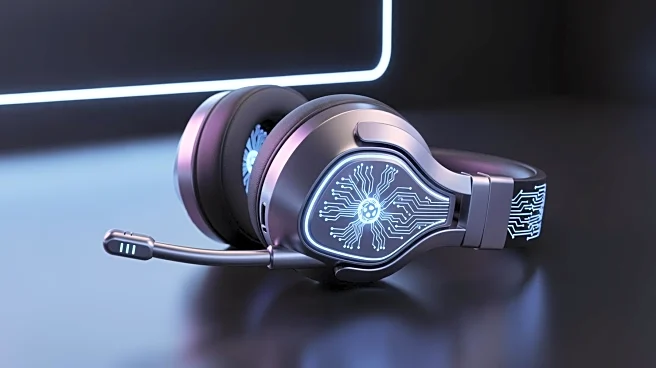
HyperX, in collaboration with Neurable, is developing a new gaming headset that utilizes neurotechnology to potentially enhance player performance in video games. The headset, which is still in the early
stages of development, is designed to improve focus and accuracy by using non-invasive neurotechnology. It features AI-powered earpad sensors that monitor EEG signals from the user's head, tracking metrics such as cognitive load and stress. Initial tests have shown promising results, with esports players experiencing faster reaction times and improved accuracy during FPS training tasks. However, the developers caution that the headset is not a quick fix for performance improvement; users will need to engage in training exercises to fully benefit from the data provided by the device.
Why It's Important?
The development of this neurotech gaming headset represents a significant advancement in the integration of technology and gaming. By potentially enhancing cognitive functions such as focus and accuracy, the headset could revolutionize competitive gaming, offering players a new tool to gain an edge in esports. This innovation also highlights the growing trend of incorporating neurotechnology into consumer electronics, which could have broader implications for other industries, such as education and professional training. The ability to monitor and improve cognitive performance through wearable technology could lead to new methods of skill development and productivity enhancement.
What's Next?
As the headset is still in the early stages of development, further testing and refinement are expected before it becomes available to the public. The collaboration between HyperX and Neurable will likely continue to focus on improving the accuracy and reliability of the neuro-sensing technology. Additionally, the Consumer Electronics Showcase, where this headset was revealed, suggests that more innovations in gaming and technology are on the horizon. Stakeholders in the gaming industry, including developers and esports organizations, will be closely monitoring the progress of this technology to assess its potential impact on competitive gaming.