





What's Happening?
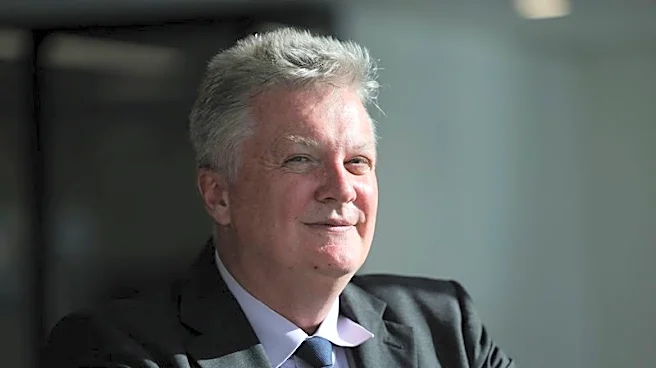
Thomas Hoenig, the former President of the Kansas City Federal Reserve and a distinguished senior fellow at the George Mason University Mercatus Center, has expressed his views on the current economic situation in the United States. During an appearance
on 'Squawk Box', Hoenig discussed the Federal Reserve's upcoming transition and the prevailing inflationary pressures. He emphasized that interest rates should not be lowered at this time. Hoenig's comments come amid ongoing debates about the Federal Reserve's monetary policy, particularly in light of rising inflation rates. His stance is that maintaining or potentially increasing interest rates could be necessary to manage inflation effectively. Hoenig's perspective is informed by his extensive experience in the Federal Reserve system, where he has been a vocal advocate for cautious monetary policy.
Why It's Important?
Hoenig's remarks are significant as they contribute to the broader discourse on how the Federal Reserve should navigate the current economic landscape. With inflation rates climbing, the Federal Reserve faces pressure to adjust its policies to stabilize the economy. Hoenig's opposition to lowering interest rates suggests a more conservative approach, prioritizing inflation control over short-term economic stimulation. This perspective could influence policymakers and stakeholders who are weighing the potential risks of inflation against the benefits of economic growth. The decision on interest rates will have far-reaching implications for various sectors, including housing, consumer spending, and investment, affecting both businesses and consumers across the United States.
What's Next?
As the Federal Reserve prepares for its leadership transition, the debate over interest rate policy is likely to intensify. Key stakeholders, including policymakers, economists, and industry leaders, will continue to analyze economic data to determine the most appropriate course of action. The Federal Reserve's decisions in the coming months will be closely watched, as they will set the tone for the U.S. economy's trajectory. Potential reactions from financial markets and international observers will also play a role in shaping the Fed's policy direction. The outcome of these discussions will be critical in determining how effectively the U.S. can manage inflation while supporting economic recovery.