
What's Happening?
Green Day frontman Billie Joe Armstrong used a pre-Super Bowl LX concert to deliver a strong message to Immigration and Customs Enforcement (ICE) agents, urging them to resign from their positions. During
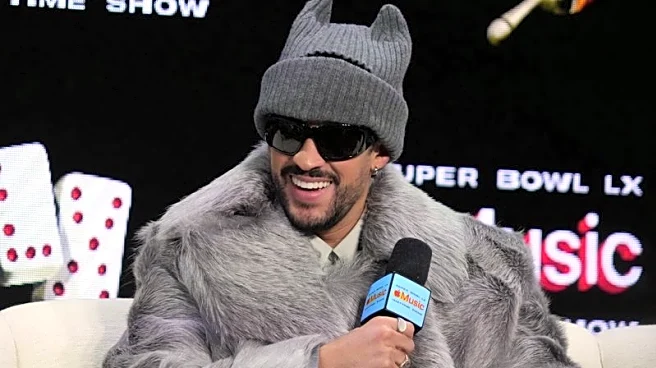
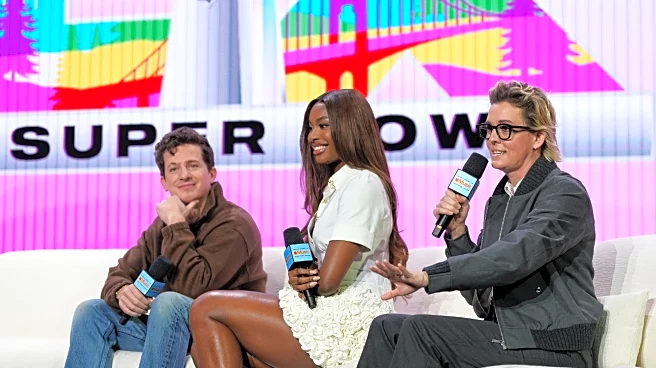
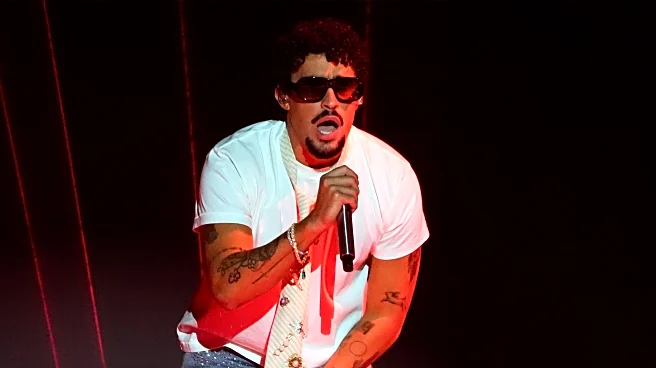
a performance at a Spotify and FanDuel-sponsored event in San Francisco, Armstrong addressed ICE agents directly, criticizing their roles and predicting that political figures like Kristi Noem, Stephen Miller, JD Vance, and President Trump would eventually abandon them. Armstrong's performance, which took place two days before the Super Bowl, included altered lyrics in songs such as 'American Idiot' and 'Holiday,' reflecting his political stance. Green Day is set to perform at the Super Bowl LX pre-game ceremony, alongside other artists like Charlie Puth, Brandi Carlile, and Coco Jones. Bad Bunny will headline the halftime show, while Turning Point USA is promoting a competing halftime show featuring Kid Rock and others.
Why It's Important?
Armstrong's public call for ICE agents to resign highlights ongoing tensions surrounding U.S. immigration policies and enforcement. His statements reflect broader societal debates about the role and actions of ICE, particularly under the Trump administration. By using a high-profile platform like a pre-Super Bowl concert, Armstrong amplifies his message to a wide audience, potentially influencing public opinion and sparking further discussion on immigration issues. The event underscores the intersection of entertainment and politics, where artists use their influence to address controversial topics. This could impact public perception of ICE and contribute to the ongoing discourse about immigration reform in the U.S.
What's Next?
As Green Day prepares to perform at the Super Bowl LX pre-game ceremony, Armstrong's comments may draw reactions from political figures, ICE representatives, and the public. The visibility of his statements could lead to increased scrutiny of ICE practices and policies. Additionally, the competing halftime show promoted by Turning Point USA, featuring artists with different political leanings, suggests a cultural divide that may be further highlighted during the Super Bowl events. The response from ICE and political leaders could shape future discussions on immigration enforcement and policy reform.