





What's Happening?
China's grip on the global rare earths market is beginning to loosen as private enterprises outside China capitalize on opportunities to diversify supply chains. Following China's introduction of new licensing rules for rare earths, which disrupted global manufacturing,
companies like Australia's Lynas and the U.S.'s MP Materials have expanded their operations. Lynas has secured a $96 million agreement with the Pentagon and plans to increase production in Malaysia. Meanwhile, MP Materials is building a domestic supply chain in the U.S., including a new manufacturing plant in Texas. These efforts are part of a broader strategy to reduce reliance on China, which currently dominates 80-90% of rare earth processing and refining.
Why It's Important?
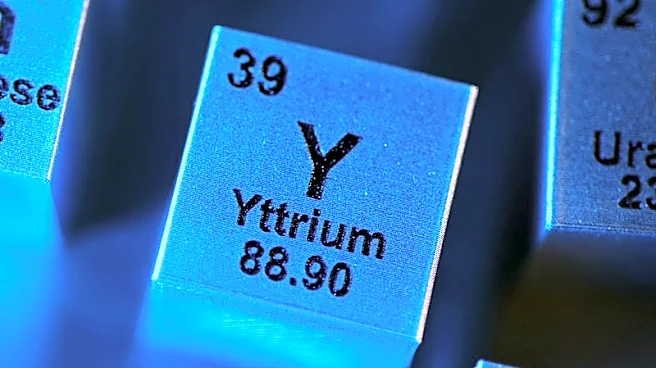
Rare earths are critical components in various technologies, including fighter jets and smartphones. China's dominance in this sector gives it significant leverage over global supply chains. The diversification of rare earths supply is crucial for national security and economic stability, particularly for the U.S., which seeks to reduce its dependency on China. The involvement of private enterprises in expanding rare earths production highlights the potential for market-driven solutions to geopolitical challenges. This shift could lead to more resilient supply chains and reduce the risk of supply disruptions caused by geopolitical tensions.
What's Next?
The U.S. government is likely to continue supporting private sector initiatives to build a robust domestic rare earths industry. This includes providing clear demand signals and ensuring a regulatory environment conducive to mining and processing activities. While breaking China's monopoly on rare earths will take time, ongoing efforts by companies like Lynas and MP Materials are steps toward achieving greater supply chain independence. The U.S. may also strengthen partnerships with countries like Australia, Malaysia, and Canada to secure alternative sources of rare earths.