







What's Happening?
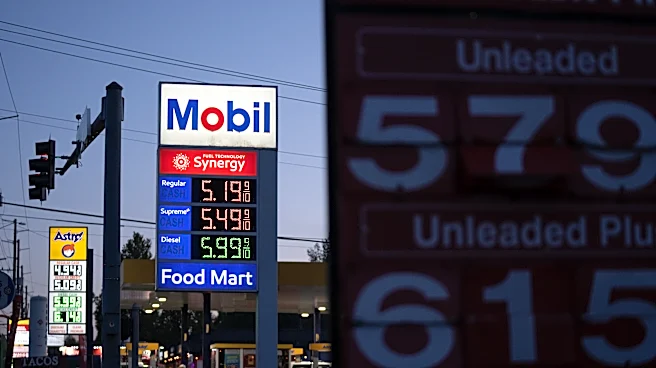
Gasoline prices in California have surged to $6 per gallon, marking the highest rate in the United States. This increase is part of a broader trend of rising fuel costs across the West Coast, where states like Nevada, Oregon, and Washington have also
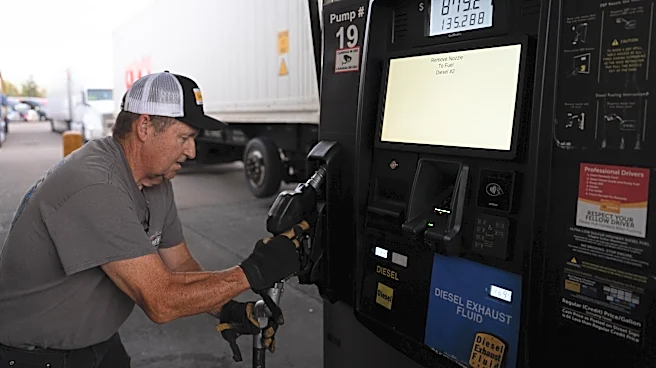
seen prices exceed $5 per gallon. The high prices are attributed to a combination of factors, including state taxes, fees, a limited number of refineries, and the necessity to import fuel. Nationally, the average price of gasoline has risen to $4.30 per gallon, the highest since July 2022. The ongoing conflict in the Middle East has contributed to the increase in oil prices, which are currently around $105 per barrel. This situation has led to significant economic implications, with Americans spending an additional $21.7 billion on gasoline since March 1, according to Patrick De Haan of GasBuddy.
Why It's Important?
The rise in gasoline prices has significant implications for the U.S. economy and consumers. Higher fuel costs can lead to increased expenses for transportation and goods, affecting household budgets and potentially slowing economic growth. The situation raises concerns about inflation, as the Personal Consumption Expenditures price index has seen its largest gain since June 2022. Analysts are debating whether the U.S. is entering a new inflationary period or if the current situation is temporary. The Federal Reserve's decision to hold interest rates steady reflects the uncertainty surrounding inflation and economic stability. The sustained high energy prices could impact various sectors, from transportation to retail, and influence consumer behavior and spending patterns.
What's Next?
Economists and policymakers are closely monitoring the situation to assess the long-term impact of rising fuel prices on the economy. The Federal Reserve's future decisions on interest rates will likely be influenced by ongoing inflationary pressures. Additionally, geopolitical developments in the Middle East could further affect oil prices and supply chains. Consumers may need to adjust their spending habits in response to higher fuel costs, potentially leading to changes in demand for goods and services. The situation underscores the importance of exploring alternative energy sources and improving energy efficiency to mitigate the impact of volatile oil prices.