
What's Happening?
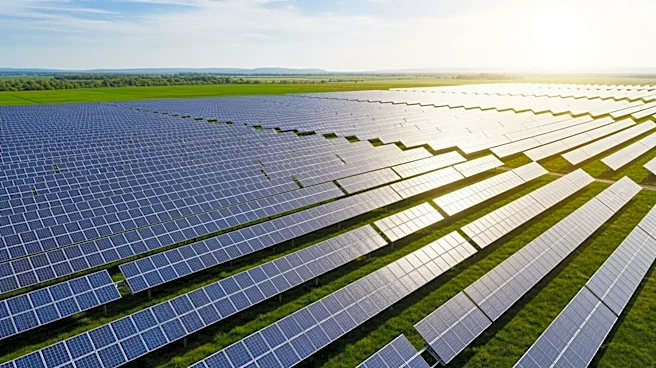
Swisher County, Texas, is set to expand its renewable energy footprint with the addition of a new 201-megawatt solar power plant adjacent to the existing 600-megawatt Hornet solar power plant. This development
is part of a broader trend in Texas, which has become a leader in renewable energy, particularly in solar and wind power. The Hornet plant has already contributed significantly to local revenue, generating over $5 million in tax revenue in its first year, with expectations to reach $100 million over 40 years. The new project, backed by $236 million in financing, is expected to further boost the local economy and support community programs. Vesper Energy, the developer, is also promoting agrivoltaic solutions, integrating solar grazing with sheep to manage vegetation and reduce maintenance costs.
Why It's Important?
The expansion of solar power in Swisher County highlights the growing importance of renewable energy in diversifying local economies traditionally reliant on oil and gas. This shift not only provides a stable revenue stream for local governments but also supports sustainable agricultural practices through solar grazing. The integration of renewable energy with local economies can serve as a model for other regions seeking to balance economic growth with environmental stewardship. Additionally, the financial backing from international and national entities underscores the global interest in U.S. renewable energy projects, potentially attracting more investment and innovation in the sector.
What's Next?
As the new solar project progresses, Swisher County may see increased interest from other renewable energy developers, potentially leading to further economic growth and job creation. The success of agrivoltaic practices could encourage more solar developers to adopt similar strategies, enhancing the sustainability of solar farms. Moreover, the financial involvement of major banks and asset management firms suggests a continued flow of capital into renewable energy projects, which could accelerate the transition to cleaner energy sources across the U.S.
Beyond the Headlines
The integration of solar power with agricultural practices, such as solar grazing, presents a unique opportunity to address land use challenges and support local farming communities. This approach not only reduces operational costs for solar farms but also provides new avenues for farmers to access land and maintain their agricultural heritage. As solar technology evolves, there may be further opportunities to integrate other forms of agriculture, such as cattle grazing, with solar power generation, potentially transforming the landscape of rural America.