





What's Happening?
A study has been conducted on a 55-kW agricultural tractor to analyze the design load for its electrification based on workload data. The tractor, powered by a 55.3-kW diesel engine, was instrumented to measure torque, rotational speed, hydraulic pressure,
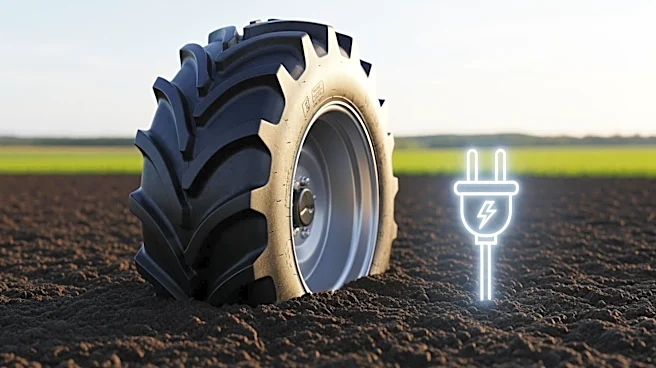
and flow rate at major power transmission points. The study aimed to understand the power distribution and load characteristics during typical agricultural operations such as plow tillage, rotary tillage, and driving. The data collected will inform the design of electric powertrains for tractors, potentially improving energy efficiency and reducing emissions in agricultural machinery.
Why It's Important?
The transition to electrified agricultural machinery is crucial for reducing the carbon footprint of farming operations. By analyzing the load characteristics of tractors, manufacturers can design more efficient electric powertrains that meet the specific demands of agricultural tasks. This shift not only supports environmental sustainability but also enhances the operational efficiency and cost-effectiveness of farming equipment. As the agricultural sector faces increasing pressure to adopt greener practices, such studies are vital for guiding the development of next-generation machinery.
What's Next?
The insights gained from this study will likely influence the design and development of electric tractors, with a focus on optimizing power distribution and load management. Future research may explore the integration of renewable energy sources to power these electric systems, further reducing reliance on fossil fuels. Additionally, the agricultural industry may see increased collaboration between researchers and manufacturers to accelerate the adoption of electrified machinery.