




What's Happening?
Rochelle Humes, a well-known presenter, has recently shifted her fitness routine to focus on strength training, marking a significant change from her previous cardio-based workouts. Under the guidance of trainer Ciara Madden, Humes has been engaging in a regimen
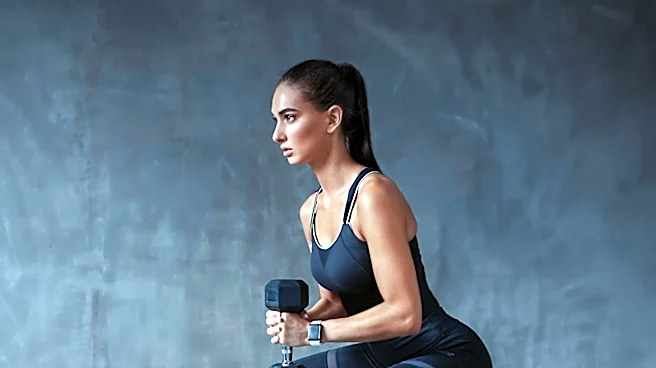
that emphasizes heavy weights and low repetitions to build muscle mass and enhance overall strength. This approach is particularly beneficial for women in their late 30s, as it helps counteract muscle mass loss, regulate hormones, and stimulate collagen production. Over a 12-week period, Humes has experienced notable improvements in her strength and body composition, including enhanced glute definition. Her training sessions, which occur once a week, involve exercises like squats and hip thrusts with progressively heavier weights.
Why It's Important?
The shift in Rochelle Humes' fitness strategy highlights the growing recognition of strength training's benefits, especially for women. As women age, maintaining muscle mass becomes crucial for overall health, and strength training offers a way to achieve this. Humes' transformation underscores the effectiveness of incorporating heavy weights into a fitness routine, challenging the traditional focus on cardio for weight management. This approach not only aids in muscle growth but also supports hormonal balance and skin health. By sharing her journey, Humes may inspire other women to consider strength training as a viable option for achieving their fitness goals, potentially influencing fitness trends and encouraging a broader acceptance of weightlifting among women.
What's Next?
As Rochelle Humes continues her strength training journey, she may further refine her fitness goals and explore additional exercises to enhance her routine. Her progress could lead to increased public interest in strength training, prompting fitness professionals to develop more programs tailored to women. Additionally, Humes' experience might encourage fitness brands to create products and services that cater to women interested in weightlifting. The broader fitness community may also see a shift in how strength training is marketed and perceived, with an emphasis on its benefits for long-term health and wellness.