


What's Happening?
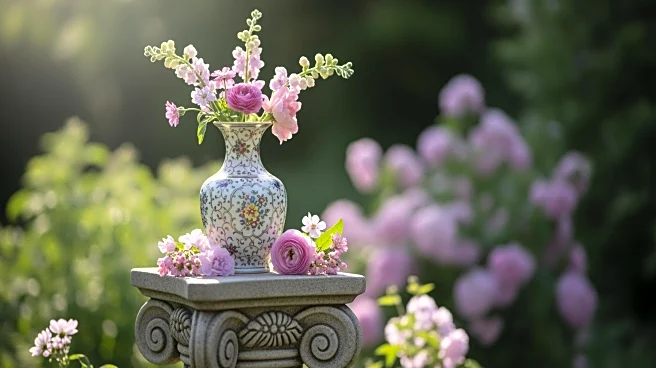
Hiba Schahbaz, a Brooklyn-based artist originally from Karachi, is showcasing her first major retrospective titled 'The Garden' at the Museum of Contemporary Art in North Miami. The exhibition, curated by Jasmine Wahi, features 80 works spanning 15 years
of Schahbaz's career. Her art, deeply rooted in Indo-Persian miniature traditions, explores themes of femininity, sensuality, and mythology. The exhibition includes both her traditional miniatures and new sculptural works, marking her first foray into three-dimensional art. Schahbaz's pieces often depict women in mythical settings, interacting with creatures like dragons and unicorns, and are organized around elemental themes such as air, earth, water, and fire.
Why It's Important?
This exhibition is significant as it highlights the intersection of cultural heritage and contemporary art through Schahbaz's unique lens. By drawing on Indo-Persian artistic traditions and integrating them with modern themes of femininity and self-exploration, Schahbaz offers a fresh perspective on identity and gender. Her work challenges traditional narratives and invites viewers to engage with complex questions about womanhood and personal identity. The exhibition also underscores the growing recognition and appreciation of diverse cultural influences in the U.S. art scene, contributing to a broader understanding of global artistic dialogues.
What's Next?
The exhibition 'The Garden' will be on display until March 16, providing ample opportunity for art enthusiasts and the general public to engage with Schahbaz's work. As her first major retrospective, it may pave the way for further exhibitions and collaborations, potentially expanding her influence in the art world. The reception of this exhibition could also influence future curatorial decisions at the Museum of Contemporary Art, North Miami, and other institutions interested in showcasing diverse cultural narratives.
Beyond the Headlines
Schahbaz's work not only explores personal and cultural identity but also touches on broader themes of ecological and mythical elements. Her use of mythical creatures and natural motifs invites viewers to consider the interconnectedness of humanity and nature. This aspect of her work resonates with contemporary discussions on environmentalism and the role of art in addressing ecological concerns. Additionally, her focus on female figures and self-portraits challenges traditional gender roles and offers a platform for discussing women's empowerment in art.