







What's Happening?
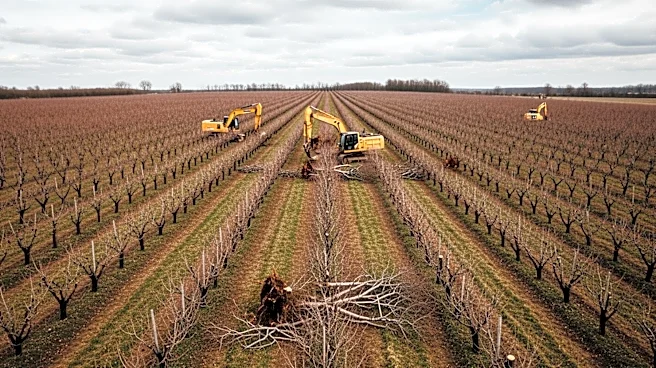
California peach growers are facing a significant challenge as they prepare to destroy approximately 420,000 clingstone peach trees. This drastic measure follows the collapse of a long-standing partnership with Del Monte Foods, which has left farmers
without buyers for their produce. The U.S. Department of Agriculture has approved up to $9 million in federal relief funding to assist farmers in removing about 3,000 acres of peach orchards before the 2026 harvest season. This decision comes after Del Monte Foods filed for Chapter 11 bankruptcy protection, leading to the closure of its processing facilities in Modesto and Hughson, California. The bankruptcy filing is part of Del Monte's strategy to restructure its debts and stabilize operations. The closure of these facilities has left many Central Valley farmers without a processing outlet for their peaches, resulting in an estimated $550 million revenue loss.
Why It's Important?
The removal of such a large number of peach trees underscores the financial strain on California's canned fruit industry following Del Monte's bankruptcy. The Central Valley has long relied on Del Monte's facilities for processing peaches, and the sudden closure has created a crisis for many family farms. The USDA's financial assistance aims to help farmers transition to different crops and manage their losses. This situation highlights the vulnerability of agricultural sectors dependent on single large processors and the broader economic impact of corporate bankruptcies on local communities. The outcome of this situation could influence future agricultural policies and the support mechanisms available to farmers facing similar challenges.
What's Next?
Farmers will begin the process of removing the peach trees and may start transitioning to other crops. The USDA's funding will play a crucial role in this transition. Meanwhile, Del Monte Foods will continue its restructuring efforts under Chapter 11 bankruptcy protection, aiming to stabilize its operations and potentially sell its assets. The situation will likely prompt discussions among lawmakers and industry stakeholders about the need for more robust support systems for farmers affected by such corporate disruptions.