
What's Happening?
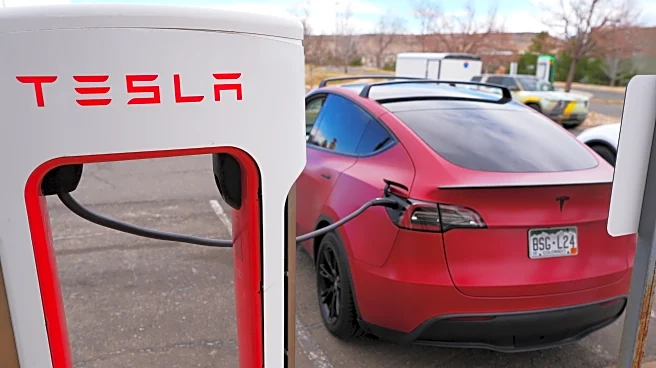
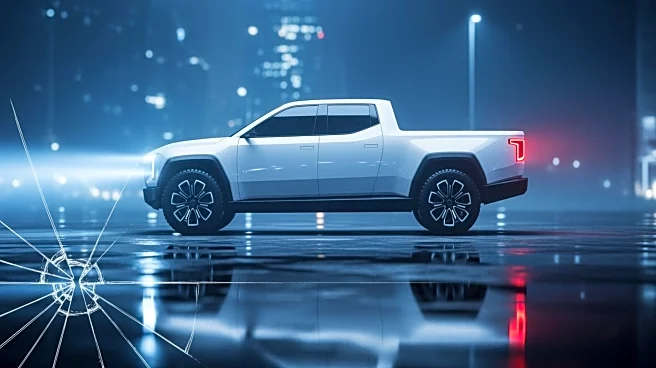
The National Highway Traffic Safety Administration (NHTSA) has escalated its investigation into Tesla's Full Self-Driving (FSD) system to an engineering analysis, the final step before a potential recall. This expanded probe now covers approximately 3.2
million Tesla vehicles. The investigation focuses on the system's ability to detect and respond to reduced visibility conditions, such as glare and airborne obstructions. NHTSA has identified nine incidents, including one fatal crash, where the FSD system failed to alert drivers in time. The investigation builds on an earlier evaluation from October 2024, initially involving 2.4 million vehicles, and now includes an additional 800,000 vehicles.
Why It's Important?
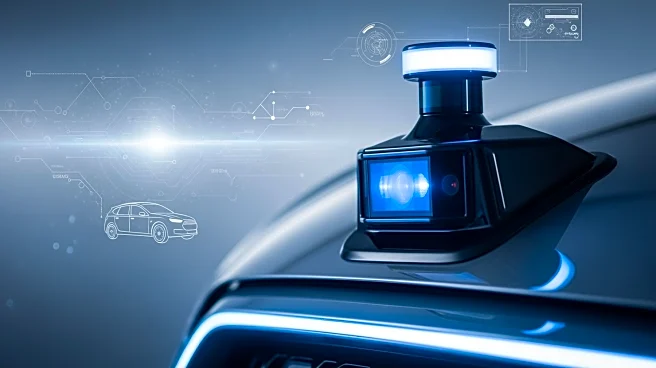
The outcome of this investigation could significantly impact Tesla's operations and its reputation in the autonomous vehicle market. A recall could lead to substantial financial costs and affect consumer trust in Tesla's technology. The probe also raises questions about the effectiveness of Tesla's camera-based system, which replaced radar-based inputs in 2021. This scrutiny comes at a time when Tesla is under pressure to demonstrate the safety and reliability of its autonomous driving features, which are central to its future business strategy and valuation.
What's Next?
NHTSA will continue to collect data and evaluate the performance of Tesla's FSD system. The agency will also review software updates introduced by Tesla to improve detection and alert capabilities. Depending on the findings, NHTSA may decide to issue a formal recall. Tesla has not yet publicly commented on the investigation, but the company may need to address these safety concerns to avoid regulatory penalties and maintain its market position.