



What's Happening?
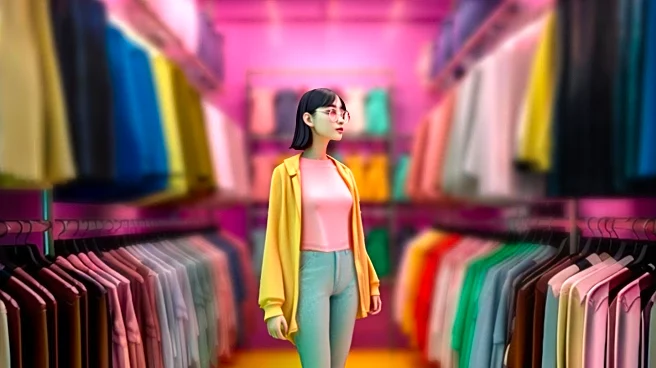
Zara has launched an AI-powered virtual try-on tool in the U.S. market, allowing customers to see how clothes would look on them without leaving their homes. This technology, introduced by the Spanish fast-fashion brand owned by Inditex, provides a 360-degree
view of outfits on a virtual model created from user-uploaded photos. The tool does not require body measurements or preferences, instead generating a photorealistic avatar dressed in Zara clothing. This innovation aims to streamline the shopping experience and make it more interactive, as users can share their virtual looks with friends. The AI try-on feature is part of a broader trend in the retail industry, where companies are increasingly adopting AI and augmented reality to enhance customer satisfaction and boost revenue.
Why It's Important?
The introduction of AI in retail, particularly in virtual try-on technology, represents a significant shift in how consumers shop for clothing. This tool can potentially reduce the need for physical store visits, offering convenience and personalization from home. For Zara, this could lead to increased customer engagement and sales, as shoppers are more likely to purchase items they can visualize on themselves. The broader retail industry is seeing similar trends, with AI adoption leading to increased revenue and reduced costs. As more companies implement AI-driven personalization, the competitive landscape of retail may shift, with brands that leverage technology gaining an edge over traditional shopping methods.
What's Next?
As AI technology continues to evolve, more retailers are expected to adopt similar virtual try-on features, enhancing the online shopping experience. Zara's success with this tool could prompt other brands to innovate and integrate AI into their business models. The retail industry may see further advancements in AI capabilities, such as improved accuracy in virtual fittings and expanded personalization options. Additionally, consumer feedback and technological improvements could lead to refinements in the AI try-on process, addressing any current glitches and enhancing user satisfaction.
Beyond the Headlines
The use of AI in fashion raises questions about privacy and data security, as personal photos are used to create virtual avatars. Companies must ensure that customer data is protected and used ethically. Furthermore, the shift towards virtual shopping experiences may impact employment in traditional retail settings, as fewer physical stores may be needed. This technological advancement also highlights the growing influence of AI in everyday life, potentially changing consumer behavior and expectations in the fashion industry.