



What's Happening?
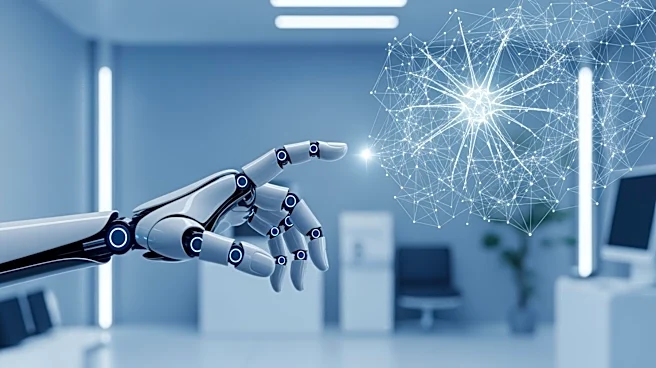
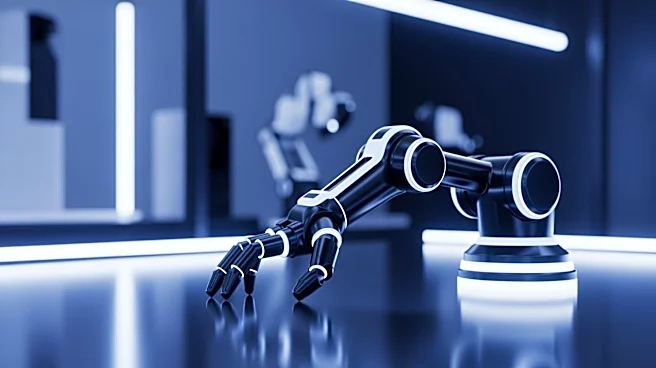
Silicon Valley is witnessing a surge in investment and development in the field of robotics, with major tech companies like Nvidia, OpenAI, Meta, and Tesla leading the charge. These companies are focusing on creating humanoid robots capable of performing
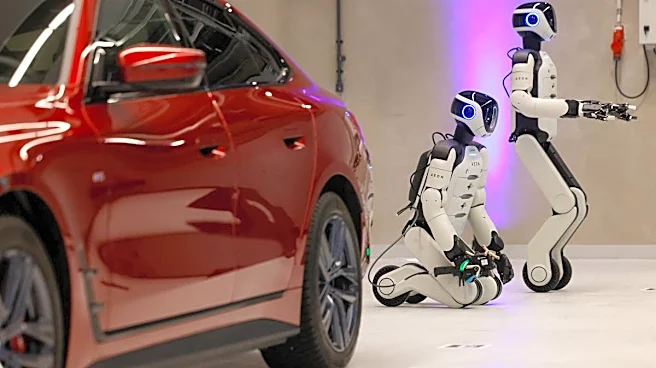
tasks in the physical world. Nvidia recently announced a standard humanoid robot blueprint for researchers, while OpenAI is reviving its robotics projects, including teaching robotic arms to perform household tasks. Meta has acquired a humanoid robotics startup to bolster its AI unit, and Tesla is working on its Optimus robot, which is expected to be available to the public by 2027.
Why It's Important?
The push towards developing humanoid robots signifies a major shift in the tech industry, as companies aim to integrate AI into physical tasks. This development could revolutionize industries such as manufacturing, logistics, and personal services by automating tasks that require physical interaction. The economic implications are vast, with the potential to create a multitrillion-dollar market for physical AI. However, this also raises questions about job displacement and the ethical considerations of deploying humanoid robots in everyday life. The race to develop these technologies highlights the competitive nature of the tech industry and the drive to lead in AI innovation.
What's Next?
As companies continue to invest in robotics, the focus will likely shift towards refining the technology and addressing challenges related to safety, ethics, and public acceptance. The deployment of humanoid robots in commercial settings will require regulatory frameworks to ensure their safe and ethical use. Additionally, the success of these projects will depend on the ability to integrate AI with physical hardware effectively. As the technology matures, it could lead to widespread adoption across various sectors, transforming how businesses operate and interact with the physical world.