






What's Happening?
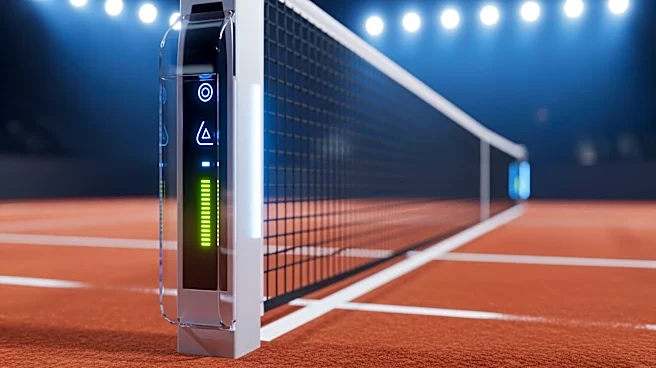
Elena Rybakina has expressed her distrust in the electronic line-calling system used at the Madrid Open after a controversial decision during her match against Zheng Qinwen. Rybakina, who won the match 4-6, 6-4, 6-3, disputed a call where Zheng was awarded
an ace despite Rybakina's belief that the ball was out. The Kazakh player argued with the umpire, Julie Kjendlie, who adhered to the electronic system's decision. Rybakina's frustration echoes past incidents, such as Alexander Zverev's similar complaint last year, highlighting ongoing concerns about the reliability of electronic line-calling in tennis.
Why It's Important?
The controversy surrounding electronic line-calling systems in tennis raises questions about the technology's accuracy and its impact on the sport. Players' trust in officiating is crucial for fair competition, and disputes like Rybakina's can undermine confidence in the system. As tennis increasingly relies on technology for officiating, ensuring its reliability is essential to maintain the sport's integrity. The issue also highlights the balance between technological advancement and traditional officiating methods, as players and officials navigate the challenges of integrating new systems into the game.
What's Next?
The ongoing debate over electronic line-calling in tennis may prompt further evaluation and potential adjustments to the system. Tennis authorities might consider reviewing the technology's accuracy and exploring ways to improve its reliability. Players and officials could engage in discussions to address concerns and enhance trust in the system. As the sport continues to evolve, finding a balance between technology and human judgment will be key to ensuring fair and accurate officiating in future tournaments.