



What's Happening?
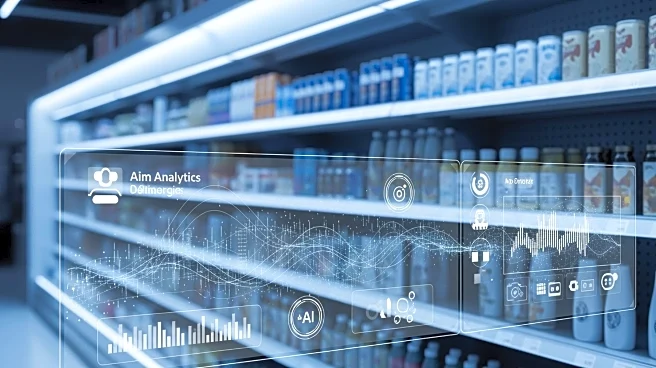
Sid Kulkarni, Vice President of Data and AI at McLane Co., highlighted the growing importance of artificial intelligence (AI) for convenience-store category managers during a recent conference. As the industry faces faster product cycles, more stock-keeping
units (SKUs), and tighter margins, AI is becoming an essential tool for managing these complexities. AI helps category managers by providing insights into consumer trends and market changes, allowing for more informed decision-making. It enhances the ability to analyze large datasets, identify patterns, and make connections that might otherwise be missed. This technological integration aims to increase revenue, profitability, and customer loyalty by optimizing product offerings and marketing strategies.
Why It's Important?
The integration of AI into convenience store management is crucial for staying competitive in a rapidly evolving retail landscape. By leveraging AI, category managers can make more data-driven decisions, improving inventory management and customer satisfaction. This shift not only helps stores operate more efficiently but also enhances their ability to respond to consumer demands quickly. As AI becomes more embedded in retail operations, it could lead to significant cost savings and increased profitability, benefiting both retailers and consumers. The adoption of AI also positions convenience stores to better compete with larger retail chains that have already embraced similar technologies.
What's Next?
As AI continues to be integrated into convenience store operations, managers will need to focus on building trust in these technologies and ensuring data quality. The industry may see further advancements in AI tools that offer even more precise insights and automation capabilities. Retailers will likely invest in training their staff to effectively use these tools, ensuring that human judgment remains a critical component of decision-making. The ongoing evolution of AI in retail could lead to new business models and strategies, further transforming the industry landscape.