


What's Happening?
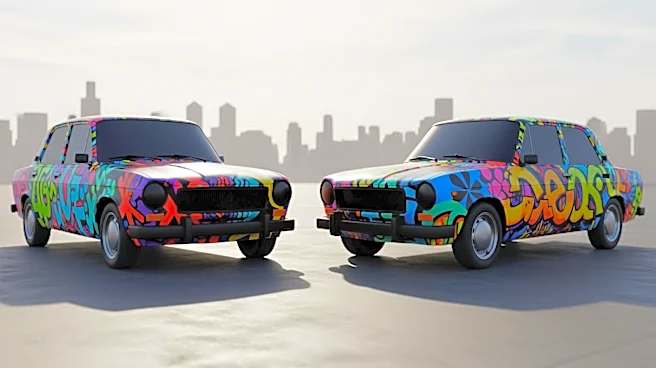
Two of Keith Haring's painted cars are being showcased in New York for the first time at the Free Parking gallery in the West Village. The exhibition, titled 'Keith Haring: In The Street,' is organized by CART Dept., a platform that highlights automobiles
as art objects. The display includes a 1963 Buick Special and a 1971 Series III Land Rover, both owned by collector Larry Warsh. These vehicles are part of a celebration for the release of the book 'Keith Haring in 3D,' which will be available from April 22. The Land Rover was originally painted by Haring for the Montreux Jazz Festival in 1983, while the Buick was the first car he ever painted. The exhibition runs from April 9 to April 19, with the Buick set to move to the Crystal Bridges Museum of American Art in Arkansas on April 14.
Why It's Important?
This exhibition underscores the enduring influence of Keith Haring in the art world, particularly in street art. By showcasing these vehicles, the event highlights Haring's innovative approach to art, where he transformed everyday objects into canvases. This not only broadens the public's understanding of art but also reinforces the cultural significance of street art as a legitimate and impactful art form. The exhibition also serves as a platform for discussions on the evolution of street art, featuring panels with prominent figures in the art community. This event could potentially increase interest in Haring's work and street art, influencing both collectors and new audiences.
What's Next?
Following the New York exhibition, the 1963 Buick Special will be displayed at the Crystal Bridges Museum of American Art in Bentonville, Arkansas, as part of the 'Keith Haring in 3D' exhibition from June 6, 2026, to January 25, 2027. The Land Rover will remain on display in New York throughout the exhibition period. Additionally, the event will feature a series of panels with notable street artists and cultural critics, which may further explore the impact of Haring's work and the future of street art. These discussions could influence future exhibitions and the perception of street art in mainstream art circles.