



What's Happening?
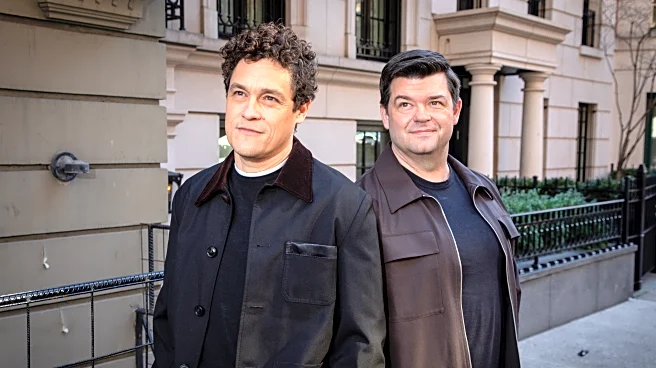
The film adaptation of Andy Weir's novel 'Project Hail Mary' is set to open, featuring a gripping sci-fi plot centered on a lone scientist-turned-astronaut tasked with saving Earth. Directed by Phil Lord and Christopher Miller, the film stars Ryan Gosling
as Ryland Grace, who embarks on an interstellar mission to understand why the Sun is dying. The story is steeped in scientific realism, incorporating elements of molecular biology and astrophysics, a hallmark of Weir's writing. The film aims to balance scientific accuracy with engaging storytelling, drawing on the expertise of scientific advisors to ensure plausibility.
Why It's Important?
The film's release underscores the growing trend of science fiction that prioritizes scientific accuracy, appealing to both science enthusiasts and general audiences. By grounding its narrative in real scientific principles, 'Project Hail Mary' not only entertains but also educates viewers about complex scientific concepts. This approach can inspire interest in STEM fields and promote scientific literacy. Additionally, the film's success could influence future sci-fi productions to adopt a similar commitment to realism, potentially leading to a new wave of scientifically grounded storytelling in cinema.
Beyond the Headlines
Beyond its entertainment value, 'Project Hail Mary' raises questions about humanity's preparedness for cosmic threats and the role of science in addressing existential challenges. The film's depiction of interstellar travel and extraterrestrial life invites viewers to consider the possibilities and limitations of current scientific knowledge. It also highlights the importance of international collaboration in scientific endeavors, reflecting real-world efforts to address global issues through cooperative research and innovation.