

What's Happening?
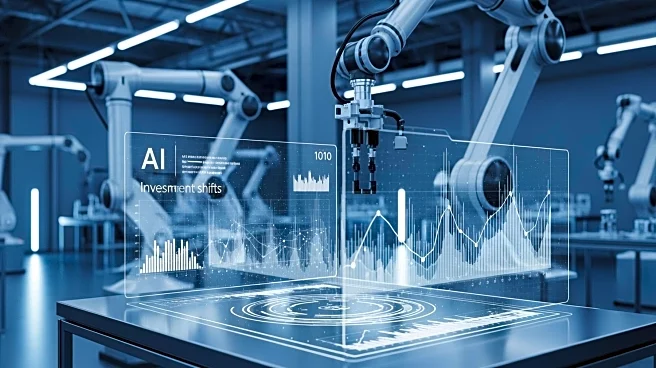
Joe Fath, a partner at Eclipse, a venture capital firm, discusses the evolving landscape of investment in physical industries as AI technology advances. Historically, software and internet-based businesses required less capital to achieve sustainability,
but AI is now enabling physical industries to become more programmable and scalable. This shift is attracting more investment into sectors like manufacturing, logistics, and robotics. Fath highlights that while AI is transforming digital tasks, it cannot fully replace the need for physical operations, which still require significant capital and skilled labor. This dynamic is leading to a reallocation of capital from software to physical industries, with companies like Amazon, Tesla, and SpaceX exemplifying this trend.
Why It's Important?
The shift in investment focus from software to physical industries signifies a major change in the venture capital landscape. As AI technology continues to advance, it is enabling physical industries to become more efficient and less capital-intensive, potentially leading to better returns on investment. This trend could have significant implications for the U.S. economy, as it may drive innovation and growth in sectors that have traditionally been more challenging to scale. Additionally, the reallocation of capital could impact the job market, as demand for skilled labor in physical industries may increase, while the pressure on software and service sectors could lead to job displacement.
What's Next?
As AI continues to integrate into physical industries, we can expect further advancements in automation and efficiency. Venture capital firms like Eclipse are likely to continue investing in companies that are at the forefront of this transformation. However, challenges remain, such as the need for skilled labor and the complexities of scaling physical operations. The geopolitical landscape, particularly U.S.-China relations, could also influence the pace and direction of these investments. Stakeholders in the tech and manufacturing sectors will need to adapt to these changes to remain competitive.