





What's Happening?
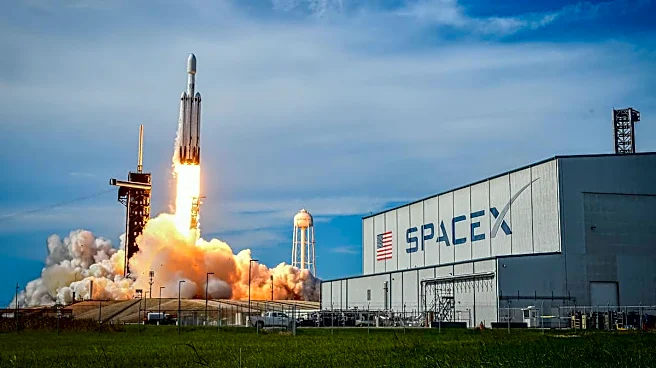
SpaceX, the aerospace company founded by Elon Musk, is set to launch its initial public offering (IPO) with the goal of raising $75 billion. This move positions SpaceX as the largest IPO in history, with a valuation of $1.75 trillion. The IPO has generated
significant excitement among investors, but it also brings potential volatility due to the high level of anticipation. Despite the company's impressive valuation, SpaceX is not currently profitable, which adds a layer of complexity to investment decisions. Investment professionals have mixed opinions on whether to buy the stock immediately or wait, given the potential for early gains and subsequent market fluctuations.
Why It's Important?
The SpaceX IPO is a landmark event in the financial and aerospace sectors, potentially reshaping investment strategies and market dynamics. As the largest IPO ever, it could influence the valuation and performance of other tech and aerospace companies. The decision by the S&P 500 not to fast-track SpaceX stock into the index may affect passive investment flows, impacting stock performance. Investors and market analysts are closely watching how the IPO will perform, as it could set a precedent for future high-profile tech listings. The outcome of this IPO could also affect the broader market sentiment and investor confidence in tech startups with high valuations but limited profitability.
What's Next?
Following the IPO, market participants will be keenly observing SpaceX's stock performance and its impact on the broader market. The company's ability to meet investor expectations and achieve profitability will be critical in sustaining its valuation. Additionally, the response from institutional investors and the potential inclusion in major stock indices will be significant factors in the stock's future trajectory. The IPO's success or failure could influence the strategies of other tech companies considering going public, potentially affecting the timing and structure of future IPOs.