





What's Happening?
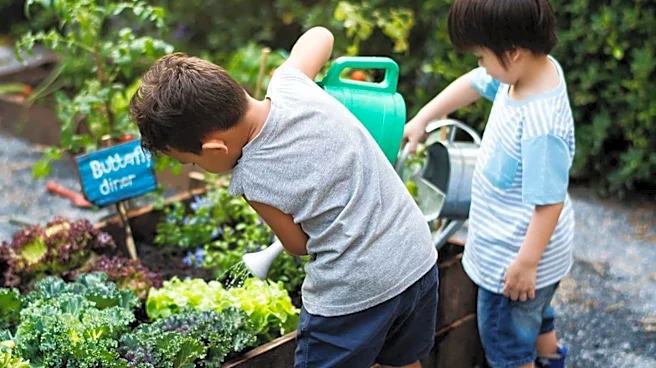
School gardens are being utilized as educational tools to enhance science learning and agricultural literacy among students. These gardens provide hands-on learning experiences, allowing students to engage with agriculture and understand food systems.
Historically, agriculture was a significant part of daily life in the U.S., but with less than 2% of the population now living on farms, many students lack direct exposure to farming. School gardens help bridge this gap by integrating agricultural education into the curriculum. They offer benefits such as increased physical activity, improved science literacy, and a better understanding of food production. However, challenges such as funding, space, and teacher confidence in gardening knowledge can hinder the implementation of these programs.
Why It's Important?
The integration of school gardens into education is crucial for fostering a generation that is more informed about agriculture and food systems. As society becomes increasingly disconnected from farming, these gardens provide a practical way to teach students about the origins of their food and the importance of sustainable practices. This knowledge is vital for making informed decisions about food consumption and understanding the economic and political challenges faced by farmers. Additionally, the hands-on nature of gardening can enhance students' engagement and retention of scientific concepts, promoting a more active and inquiry-based learning environment.
What's Next?
To overcome the challenges of implementing school gardens, schools may need to seek partnerships with local agricultural organizations or secure grants to fund these initiatives. Training programs for teachers could also be developed to build confidence in using gardens as educational tools. As awareness of the benefits of school gardens grows, there may be increased advocacy for their inclusion in educational policies and curricula. This could lead to more widespread adoption of school gardens, ultimately contributing to a more agriculturally literate society.