



What's Happening?
General Motors (GM) and LG Energy Solution have announced the conversion of their jointly-operated battery plant in Tennessee to produce cells for energy storage systems (ESS). This move will recall 700 workers who were laid off earlier this year. The
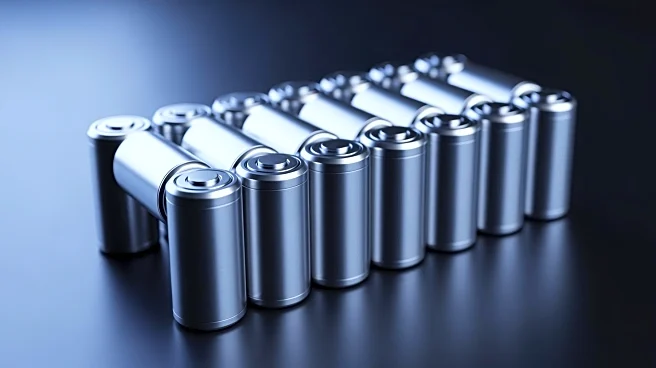
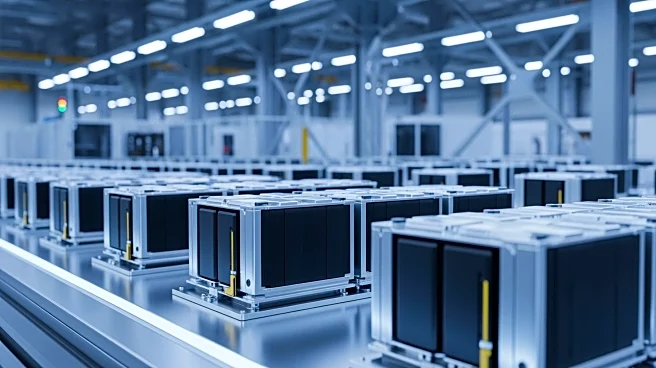
facility, operated through the Ultium Cells joint venture, will begin producing lithium-iron-phosphate (LFP) batteries in the second quarter, which LG will sell to grid and data center customers. This development is part of GM's broader strategy to pivot away from electric vehicle (EV) batteries due to weak demand, high costs, and the elimination of federal EV tax credits. The retooling of the Tennessee plant is expected to cost tens of millions and involves replacing equipment configured for nickel-manganese-cobalt cells.
Why It's Important?
The conversion of the Tennessee plant signifies a significant shift in GM's strategy, reflecting broader trends in the North American battery industry. The move away from EV batteries towards energy storage systems is driven by the need to address surplus capacity and adapt to changing market demands. This pivot could have substantial implications for the energy storage market, which is experiencing rapid growth. The U.S. installed 57.6 GWh of new capacity in 2025, a 30% increase over the previous year. However, the shift also poses risks, as the market could become oversaturated with products if too many companies pursue similar strategies.
What's Next?
The retooling of the Tennessee plant is expected to be completed by the end of April, with workers returning sooner than initially planned. GM and LG's focus on energy storage systems aligns with the growing demand for electricity in AI data centers and other applications. As the market for energy storage continues to expand, GM and LG's strategic pivot could position them as key players in this sector. However, the success of this transition will depend on the ability to balance supply and demand effectively.