
What's Happening?
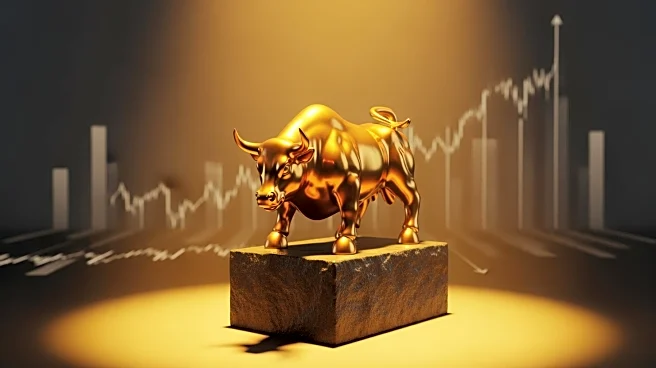
The gold market is experiencing a bullish trend, with analysts suggesting that the current bull market is just beginning. The price of gold has been rising due to increasing demand as a store of value
and portfolio insurance amid growing concerns about the international credit and fiat money system. Investors are turning to gold to hedge against potential economic crises, inflation, and currency devaluation. The metal's demand is driven by its stability and historical role as a safe-haven asset. Analysts predict that gold prices could reach $5,000 per ounce in the next year, reflecting a significant return potential.
Why It's Important?
Gold's rising demand underscores its importance as a hedge against economic instability and inflation. As central banks continue to expand credit and money supplies, investors are seeking assets that can preserve value. The potential for a global economic crisis, driven by excessive debt and low interest rates, is prompting investors to increase their gold holdings. This trend highlights the challenges facing the global financial system and the need for diversification in investment portfolios. The sustained demand for gold could impact various sectors, including mining and financial services, as they adapt to changing market dynamics.
What's Next?
The gold market is expected to remain strong, with potential price increases driven by ongoing economic uncertainties and investor demand. Analysts will be closely monitoring central bank policies, inflation data, and geopolitical developments for their impact on gold prices. As the market evolves, investors may continue to allocate more assets to gold, reinforcing its role as a key component of diversified portfolios. The potential for further economic disruptions could accelerate this trend, making gold an attractive option for long-term wealth preservation.