





What's Happening?
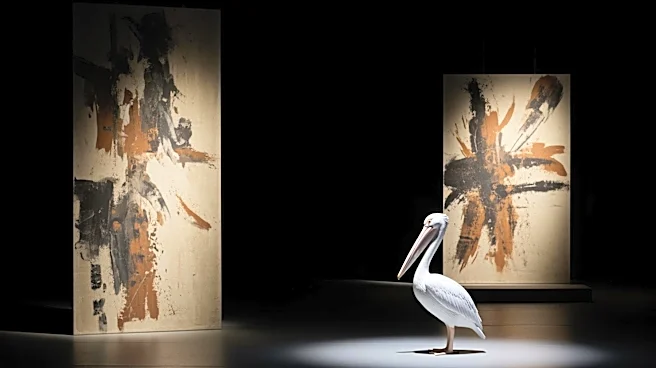
The Trisha Brown Dance Company has reimagined Robert Rauschenberg's 1963 dance piece 'Pelican' for the first time, staging it at a benefit event in Brooklyn's Xanadu roller skating rink. Originally performed by two men on roller skates and a ballerina
on pointe, 'Pelican' is known for its audacious concept and mythic status in the dance world. The revival involved choreographer Tara Lorenzen and dancers Ashley Hod, Rashaun Mitchell, and Silas Riener, who combined archival research with new creative elements. The performance was a trust exercise, requiring the dancers to rely on their training and each other, particularly during the climax when the skaters encircle the ballerina, creating a music box-like effect.
Why It's Important?
The revival of 'Pelican' highlights the enduring influence of Robert Rauschenberg's work in the arts, bridging visual art and dance. It showcases the collaborative spirit of the 1960s Greenwich Village art scene, where boundaries between art forms were fluid. This event not only celebrates Rauschenberg's legacy but also underscores the importance of preserving and reinterpreting historical art pieces. The performance serves as a testament to the innovative spirit of the Trisha Brown Dance Company, contributing to the cultural richness of Brooklyn and offering audiences a unique artistic experience.
What's Next?
Following the successful revival, there may be increased interest in exploring other historical dance pieces, potentially leading to more collaborations between visual artists and dancers. The Trisha Brown Dance Company might consider further performances or adaptations of 'Pelican' or similar works, fostering a deeper appreciation for interdisciplinary art. Additionally, the event could inspire other dance companies to delve into archival research and reinterpretation, expanding the repertoire of contemporary dance.
Beyond the Headlines
The revival of 'Pelican' raises questions about the role of accidents and serendipity in artistic creation, as the original piece was born from a typo in a festival program. It also highlights the challenges and rewards of reconstructing historical art, requiring a forensic approach to piecing together incomplete records. This event exemplifies the power of art to transcend time, offering new interpretations and experiences to modern audiences while honoring the past.