


What's Happening?
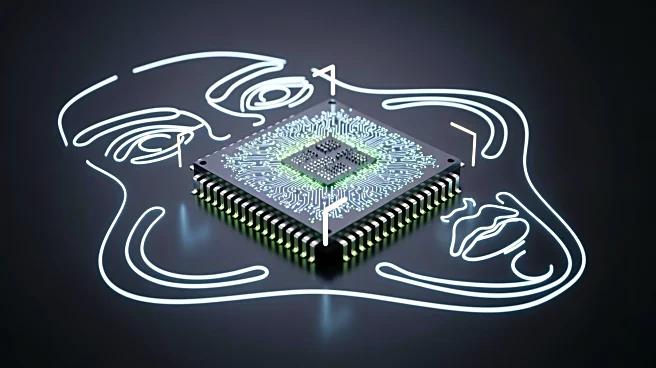
Nvidia has introduced a new always-on computer vision system capable of detecting human faces in less than a millisecond. This system, presented by Nvidia electrical engineer Ben Keller at the IEEE International Solid State Circuits Conference, is designed
to be integrated into robots, autonomous vehicles, and consumer electronics like laptops. The chip operates with minimal power consumption, using less than 5 milliwatts, and processes images at a rate of 60 frames per second. The system employs a deep-learning accelerator to achieve a 99 percent accuracy rate in face detection. The technology aims to save energy by storing data locally and quickly entering a low-power sleep mode after detections, a method referred to as 'race to sleep'. Potential applications include energy-saving features in laptops and enhanced vision capabilities for autonomous vehicles and drones.
Why It's Important?
The development of Nvidia's energy-efficient face detection chip represents a significant advancement in the field of computer vision and autonomous systems. By reducing power consumption, this technology can extend the battery life of devices and improve the efficiency of autonomous systems. For consumer electronics, it offers a seamless user experience by automatically managing power based on user presence. In the realm of autonomous vehicles and robotics, the chip's rapid detection capabilities could enhance safety and operational efficiency. This innovation aligns with the growing demand for sustainable technology solutions that minimize energy usage while maximizing performance, potentially influencing future designs in various tech industries.
What's Next?
Nvidia's new chip could lead to broader adoption of always-on vision systems across multiple sectors. As the technology is integrated into more devices, it may prompt further research and development in low-power computing solutions. Companies in the robotics and automotive industries might explore partnerships with Nvidia to incorporate this technology into their products, potentially leading to new applications and improvements in autonomous systems. Additionally, the chip's capabilities could inspire advancements in other areas of artificial intelligence, particularly in enhancing real-time data processing and decision-making.
Beyond the Headlines
The introduction of Nvidia's chip raises important considerations regarding data privacy and security. As devices become more capable of detecting and processing personal data, there is a need for robust measures to protect user information. The technology also highlights the ethical implications of surveillance capabilities in everyday devices, prompting discussions about the balance between convenience and privacy. Long-term, this development could influence regulatory frameworks governing the use of facial recognition technology, as well as spark debates on the societal impact of pervasive surveillance.