


What's Happening?
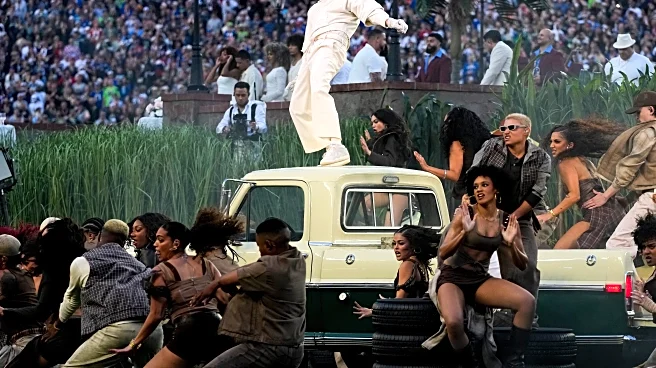
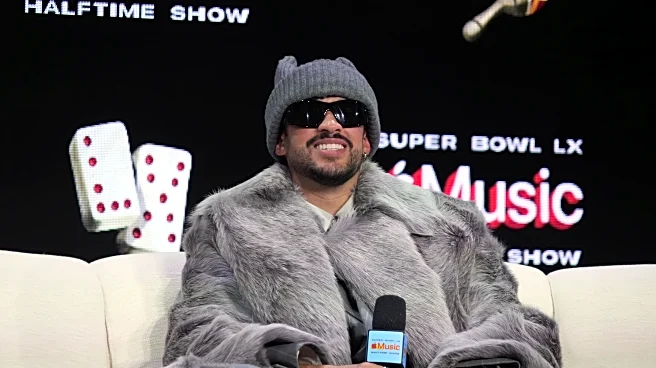
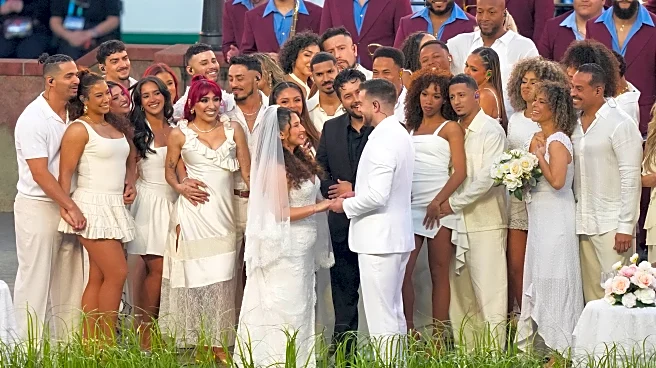
Bad Bunny's performance at the Super Bowl LX Halftime Show became a topic of widespread discussion, particularly due to a segment involving a young boy. During the show, Bad Bunny performed his hit 'NUEVAYoL' and handed his Grammy trophy to a child, leading to online speculation about the boy's identity. Some users incorrectly identified the child as Liam Ramos, a five-year-old recently detained by ICE in Minnesota. However, The Hollywood Reporter confirmed that Liam was not part of the performance. The show featured numerous celebrity appearances, including Pedro Pascal, Cardi B, and Lady Gaga, and even included a live wedding ceremony. Bad Bunny concluded his performance with a message promoting love over hate.
Why It's Important?
The incident highlights the power
of media and public perception in shaping narratives, especially when involving high-profile events like the Super Bowl. The incorrect identification of the child as Liam Ramos underscores the challenges of misinformation in the digital age. Bad Bunny's performance, which included a strong message against hate and a call for unity, reflects the artist's ongoing advocacy for social issues, particularly concerning immigration and ICE policies. This aligns with his previous statements at the Grammy Awards, where he criticized ICE and emphasized love as a counter to hate. The event also demonstrates the cultural influence of artists like Bad Bunny in using their platforms to address significant societal issues.
What's Next?
While the immediate speculation about the child's identity has been clarified, the broader conversation about immigration and ICE's practices is likely to continue. Bad Bunny's advocacy may inspire further discussions and actions within the entertainment industry and beyond. Stakeholders, including policymakers and advocacy groups, might leverage this moment to push for reforms or increased awareness about immigration issues. Additionally, the entertainment industry may see more artists using their platforms to address social and political issues, potentially influencing public opinion and policy.