



What's Happening?
The Pi Network, a digital ecosystem known for its mobile-first approach to cryptocurrency mining, is being positioned as a potential bridge between blockchain technology and artificial intelligence (AI) development. The network has attracted a global
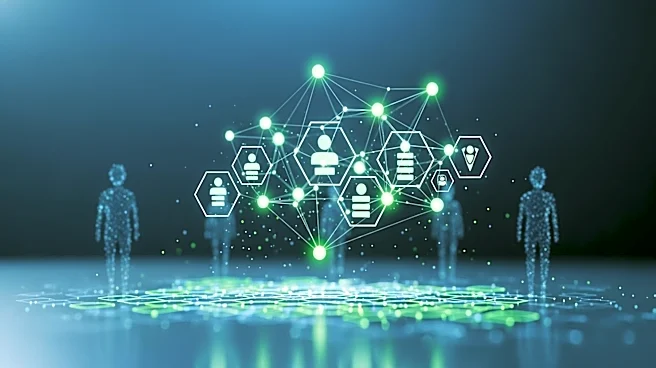
user base by focusing on user accessibility and identity verification, creating a community of active and authenticated participants. This human-centric approach is seen as a solution to one of AI's biggest challenges: the need for high-quality human input. The integration of Pi Network's verified user base with AI systems could lead to the creation of a decentralized AI workforce. This workforce would contribute to AI training processes through tasks such as data labeling and content moderation, potentially democratizing access to the AI economy and fostering economic inclusion.
Why It's Important?
The integration of Pi Network's decentralized model with AI development could significantly impact the tech industry by addressing the limitations of current AI systems, which often rely on low-quality or manipulated data. By ensuring contributions come from real, authenticated users, the reliability and trustworthiness of AI training datasets could be improved. This approach aligns with the principles of web3, emphasizing decentralization and user ownership, and could redistribute economic value more equitably among contributors. Additionally, it could create new income streams for individuals in underserved regions, allowing them to participate in and benefit from technological advancements. The potential for a decentralized AI workforce to reshape the AI economy highlights the growing importance of human input in the development of intelligent systems.
What's Next?
For the vision of a decentralized AI workforce to become a reality, several challenges must be addressed, including scalability, governance, and ethical considerations. Robust systems for coordination, quality control, and dispute resolution will be necessary to manage a large decentralized workforce. Additionally, user engagement will be crucial, requiring clear incentives and intuitive interfaces to translate participation into meaningful contributions. The economic dimension of this model is also significant, as it could lead to the emergence of new digital professions centered around AI training and data validation. However, regulatory frameworks for both AI and cryptocurrency are still evolving, and the intersection of these fields presents additional complexities that policymakers will need to address.
Beyond the Headlines
The potential integration of blockchain and AI raises important questions about the future of digital innovation. By combining the strengths of blockchain and human collaboration, this approach could redefine the relationship between humans and machines, emphasizing collaboration over replacement. The role of platforms like Pi Network may become increasingly significant as the demand for high-quality human input continues to grow. This shift could mark a profound change in how intelligent systems are built and who gets to participate in and benefit from the AI revolution. The convergence of AI and blockchain represents a compelling direction for the future, where human input remains indispensable even in an era of advanced automation.