






What's Happening?
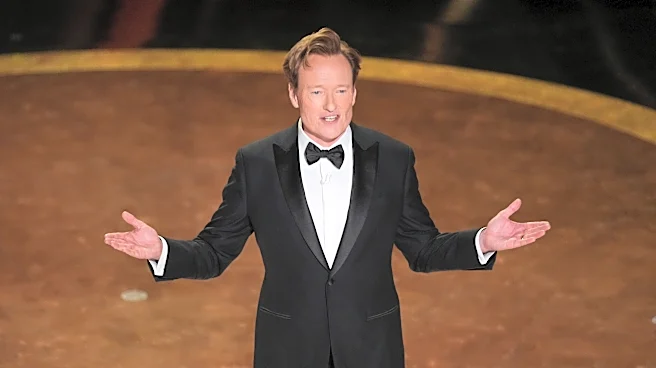
Comedian Conan O'Brien delivered a commencement address at Harvard University, urging graduates to not let their Ivy League degree define them. O'Brien, who graduated from Harvard in 1985, emphasized the importance of not allowing a single achievement
to dictate one's identity or success. He shared his personal experiences, noting that being primarily known as a Harvard graduate initially came with stereotypes that worked against him in his comedy career. O'Brien encouraged graduates to focus on broader personal growth and connections rather than solely on their academic achievements. He highlighted the role of luck and the importance of being open to failure and learning from diverse experiences.
Why It's Important?
O'Brien's message challenges the traditional emphasis on prestigious academic credentials as the primary measure of success. This perspective is significant in a society where Ivy League degrees are often seen as a gateway to elite opportunities. By advocating for a broader definition of success, O'Brien aligns with a growing sentiment among business leaders who question the value of traditional higher education in preparing students for the workforce. His advice encourages graduates to seek personal fulfillment and growth beyond academic accolades, potentially influencing how future generations perceive and pursue career paths.
What's Next?
Graduates may take O'Brien's advice to heart as they enter the workforce, potentially shifting their focus from academic prestige to personal development and community building. This could lead to a reevaluation of the role of higher education in career success, prompting institutions to adapt their curricula to better prepare students for real-world challenges. Additionally, O'Brien's remarks may inspire discussions among educators and policymakers about the evolving value of college degrees in a rapidly changing job market.
Beyond the Headlines
O'Brien's speech touches on broader cultural and societal themes, such as the importance of humility and the recognition of luck in achieving success. His emphasis on personal growth and community resonates with current trends in mental health and well-being, where individuals are encouraged to find balance and meaning beyond professional achievements. This perspective may contribute to a cultural shift towards valuing diverse experiences and interpersonal connections over traditional markers of success.