




What's Happening?
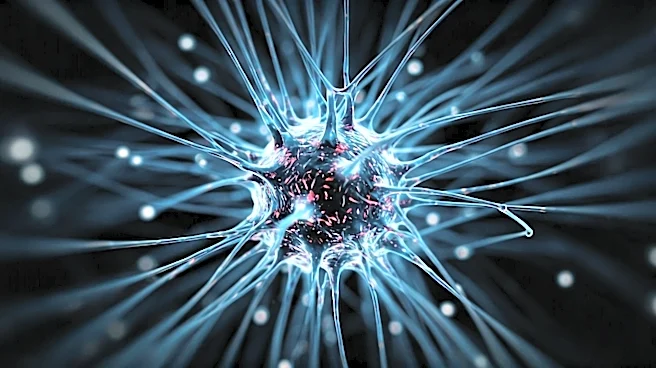
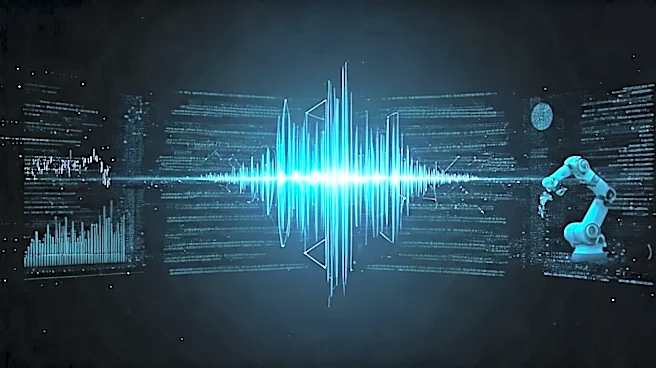
Researchers Ian Whitehouse, Hoony Kang, and Wolfgang Losert have developed a 'rhythmic sharing' algorithm inspired by the oscillatory behavior of astrocytes in the brain. This algorithm is designed to detect subtle shifts in complex data streams, known
as concept drift, with improved accuracy. By varying connections between computational nodes sinusoidally, the algorithm enhances sensitivity to distributional drift. It has been tested on datasets such as NASA C-MAPSS, SWaT, and WADI, achieving state-of-the-art F1-scores. The research suggests that oscillatory link dynamics could be a general computational principle with implications for neuromorphic hardware and understanding astrocytic network biology.
Why It's Important?
The development of this algorithm represents a significant advancement in the field of artificial intelligence and machine learning. By mimicking biological processes, the algorithm offers a novel approach to detecting changes in complex systems, which is crucial for applications in industrial safety and process optimization. The ability to identify subtle shifts in data streams can lead to more efficient and accurate monitoring systems, potentially reducing the risk of failures in critical infrastructure. This research also opens new avenues for integrating biological principles into computational models, which could revolutionize the design of future AI systems.
Beyond the Headlines
The algorithm's success in detecting concept drift highlights the potential for biologically-inspired computing to address complex challenges in AI. This approach challenges the traditional reliance on static, computationally intensive methods, suggesting that adaptable, rhythmic processes may offer more efficient solutions. The implications extend beyond AI, potentially informing the development of neuromorphic hardware and providing insights into the functioning of astrocytic networks in the brain. This convergence of biology and technology could lead to more sustainable and effective computing paradigms.