




What's Happening?
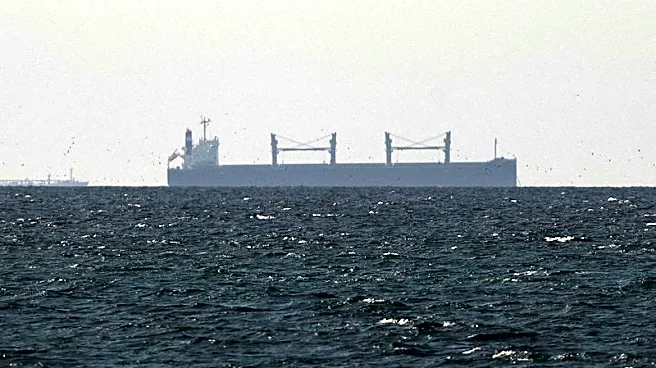
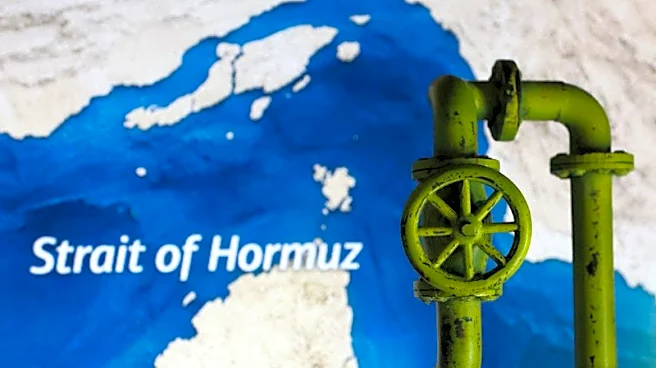
Gold prices remained steady on Tuesday as investors awaited the outcome of a deadline set by President Trump for Iran to reopen the Strait of Hormuz. Spot gold traded 0.6% higher at $4,674.89 per ounce, while U.S. gold futures for June delivery rose 0.4%
to $4,702.20. The geopolitical tensions have kept markets cautious, with Iran expressing a desire for a lasting end to the conflict with the U.S. and Israel. Meanwhile, oil prices have surged, fueling inflation concerns. The Federal Reserve's stance on interest rates remains a key focus, with no rate cuts expected this year according to market indicators.
Why It's Important?
The stability in gold prices amid geopolitical tensions highlights the metal's role as a safe-haven asset during periods of uncertainty. The situation in the Middle East, particularly the potential reopening of the Strait of Hormuz, is a critical factor influencing market sentiment. The rise in oil prices has exacerbated inflation concerns, impacting monetary policy decisions. The Federal Reserve's focus on inflation over employment underscores the challenges faced by policymakers in balancing economic growth and price stability. Investors are closely watching these developments to gauge their impact on financial markets and the broader economy.
What's Next?
Market participants are awaiting the release of the Federal Reserve's March policy meeting minutes and upcoming U.S. inflation indicators, including the Personal Consumption Expenditures (PCE) data and the Consumer Price Index (CPI). These reports will provide insights into the Fed's monetary policy outlook and its approach to managing inflation. Additionally, the geopolitical situation in the Middle East remains fluid, with potential implications for global energy markets and economic stability. Investors will continue to monitor these developments to assess their impact on asset prices and investment strategies.