







What's Happening?
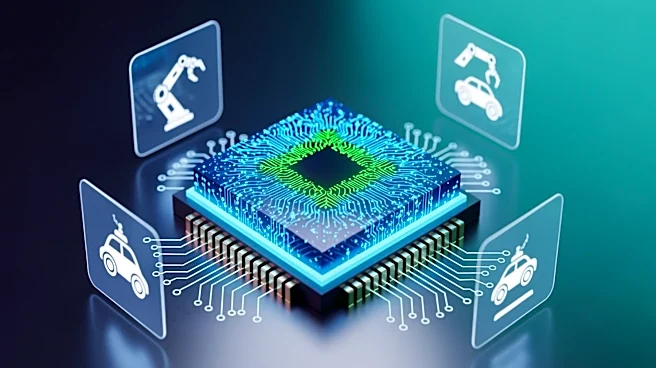
Edge computing is increasingly being recognized as a critical component in the development of AI applications, particularly in the fields of robotics and mobility systems. This technology allows for data processing closer to the source, which is essential
for real-time decision-making in autonomous systems. The convergence of perception systems across various platforms, such as cars, robots, and drones, highlights the importance of edge computing in ensuring reliable operations under real-world conditions. Companies like BT and T-Mobile are leveraging edge computing to enhance AI-powered workplace collaboration and customer experiences, respectively. The automotive industry, in particular, has shifted towards treating vehicles as integrated networks of sensors and processors, a model that is now being adopted by other sectors.
Why It's Important?
The adoption of edge computing in AI applications is significant as it addresses the need for real-time data processing and decision-making, which is crucial for the functionality of autonomous systems. This shift is expected to enhance the efficiency and reliability of robots, drones, and other mobility systems, potentially transforming industries such as logistics, healthcare, and manufacturing. By enabling faster and more reliable data processing, edge computing can reduce latency and improve the performance of AI systems, leading to more advanced and capable autonomous technologies. This development could lead to increased competitiveness and innovation in the U.S. technology sector, as companies strive to integrate these capabilities into their products and services.
What's Next?
As edge computing continues to gain traction, it is likely that more industries will adopt this technology to enhance their AI applications. The ongoing convergence of perception systems across different platforms suggests that there will be a growing demand for integrated solutions that can operate reliably in dynamic environments. Companies may invest in developing new architectures and systems that leverage edge computing to improve the performance and reliability of their products. Additionally, there may be increased collaboration between technology providers and industry stakeholders to develop standards and best practices for implementing edge computing in AI applications.
Beyond the Headlines
The integration of edge computing into AI applications raises important considerations regarding data privacy and security. As more data is processed at the edge, there is a need to ensure that sensitive information is protected from unauthorized access. This may lead to the development of new security protocols and technologies to safeguard data in edge computing environments. Furthermore, the widespread adoption of edge computing could have implications for workforce dynamics, as it may require new skills and expertise in data management and system integration. Companies may need to invest in training and development programs to equip their employees with the necessary skills to work with these advanced technologies.