






What's Happening?
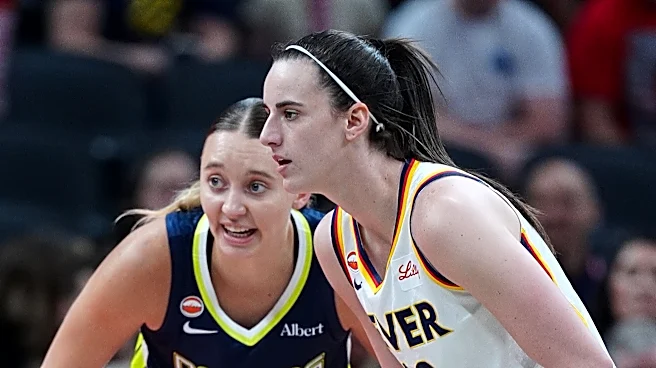
Caitlin Clark, a prominent WNBA player, has been ranked third in marketability by Kevin Durant's company, Boardroom, behind A'ja Wilson and Paige Bueckers. This ranking has sparked significant backlash from fans who argue that Clark's popularity and influence
in basketball are not accurately reflected. Despite being ranked third, Clark is a major draw for the league, with all her games being televised and her merchandise, including Nike shoes and apparel, being highly sought after. The Covers WNBA Marketability Index, which uses different metrics, ranked Clark first, highlighting a discrepancy in evaluations. Clark's marketability and influence are further underscored by her significant media presence and the attention she garners, which some attribute to her background and race.
Why It's Important?
The controversy surrounding Caitlin Clark's marketability ranking highlights ongoing discussions about representation and recognition in sports. Clark's position in the rankings, despite her evident popularity, raises questions about the criteria used to evaluate athletes' marketability. This situation underscores the broader issue of how athletes, particularly women in sports, are valued and recognized. The backlash also reflects the passionate fan base that Clark has cultivated, which is crucial for the growth and visibility of the WNBA. The league's expansion and increased media coverage are partly driven by players like Clark, who attract significant attention and engagement.
What's Next?
As the WNBA season progresses, Caitlin Clark's performance and influence will continue to be closely watched. The league and its stakeholders may need to address the criteria and transparency of marketability rankings to ensure they reflect the true impact of players. Additionally, the ongoing discussions about race and representation in sports may lead to broader conversations and potential changes in how athletes are marketed and perceived. The response from fans and media will likely influence future evaluations and the strategies employed by the WNBA to promote its players.
Beyond the Headlines
The debate over Caitlin Clark's ranking also touches on deeper societal issues, such as the intersection of race, gender, and marketability in sports. The criticism from some quarters about the racial dynamics in Clark's popularity suggests that there are underlying tensions that need to be addressed. This situation could prompt the WNBA and other sports organizations to examine their practices and ensure that all athletes are given fair opportunities and recognition. The long-term impact of these discussions could lead to more inclusive and equitable practices in sports marketing and representation.