



What's Happening?
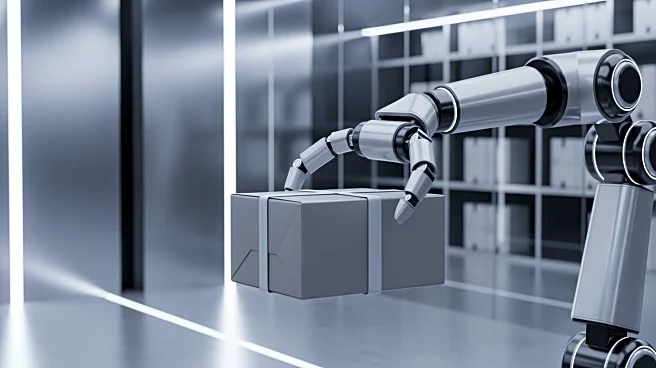
Amazon has acquired Rightbot, a company specializing in robotics for unstructured load handling, as part of its strategy to enhance its Robotics Delivery and Packaging Innovation team. This acquisition is part of a broader trend in the robotics industry, which saw significant investments totaling $4.6 billion in humanoid developers in 2025. The move comes amid increasing competition in the automation of strenuous tasks such as truck loading and unloading, which are performed in various weather conditions. Additionally, Boston Dynamics, in collaboration with Google, is working on enhancing the capabilities of its Atlas humanoid robot using DeepMind's Gemini Robotics foundation models. Microsoft has also introduced the Rho-alpha model, a vision-language-action
model designed to improve the autonomy of physical AI systems.
Why It's Important?
The acquisition of Rightbot by Amazon underscores the growing importance of automation in logistics and supply chain management. By integrating advanced robotics into its operations, Amazon aims to improve efficiency and reduce the physical strain on human workers. This development is significant for the U.S. economy as it highlights the increasing reliance on robotics to address labor shortages and enhance productivity. The collaboration between Boston Dynamics and Google, as well as Microsoft's advancements in AI models, further illustrates the rapid evolution of robotics technology. These innovations have the potential to transform various industries, from manufacturing to healthcare, by enabling more autonomous and intelligent systems.
What's Next?
As Amazon integrates Rightbot's technology, it is likely to focus on optimizing its logistics operations to handle increased demand and improve delivery times. The collaboration between Boston Dynamics and Google may lead to further advancements in humanoid robotics, potentially expanding their applications in industrial and service sectors. Microsoft's Rho-alpha model could pave the way for more sophisticated AI systems capable of operating in dynamic environments. These developments may prompt other companies to invest in similar technologies to remain competitive, potentially leading to a surge in innovation and adoption of robotics across various sectors.