


What's Happening?
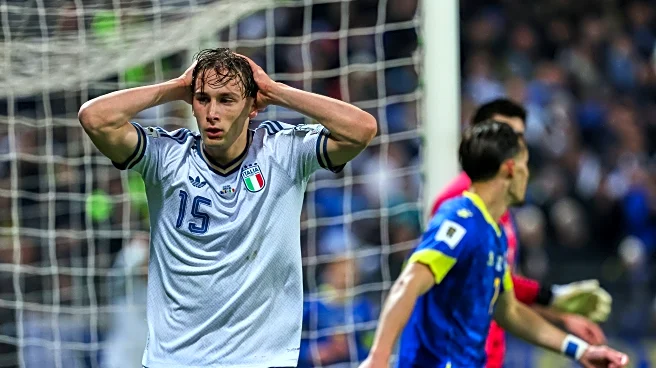
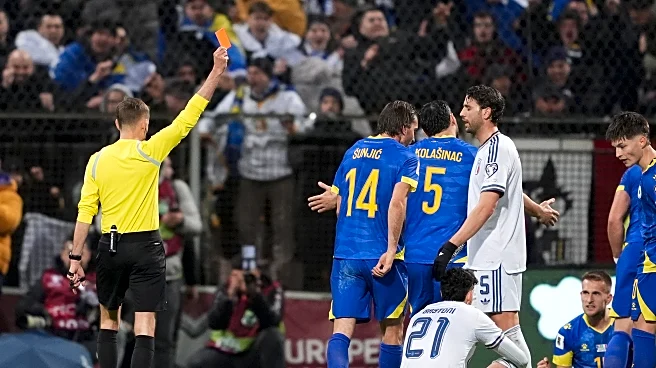
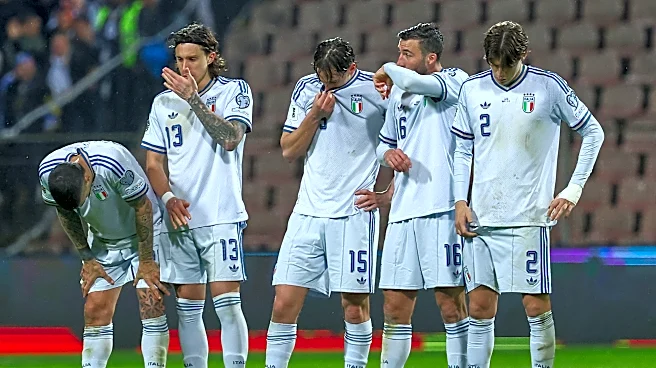
Italy's national soccer team has failed to qualify for the World Cup for the third consecutive time, following a penalty shootout loss to Bosnia and Herzegovina. This marks a significant downturn for the four-time World Cup champions, who were previously
eliminated by Sweden in 2018 and North Macedonia in 2022. The Italian sports community is labeling this latest failure as the 'third apocalypse,' indicating a normalization of such outcomes. The Italian soccer federation president, Gabriele Gravina, is under pressure to resign, with Sports Minister Andrea Abodi calling for new leadership to overhaul Italian soccer. Former Italian Premier Matteo Renzi emphasized the cultural significance of soccer in Italy, highlighting the need for systemic changes.
Why It's Important?
The repeated failures of Italy's national team to qualify for the World Cup have broader implications for Italian soccer and its cultural identity. Soccer is deeply ingrained in Italian culture, and these failures reflect systemic issues within the sport's governance and development. The lack of success at the international level could impact Italy's reputation in global soccer, affecting sponsorships, investments, and the development of future talent. Calls for leadership change suggest a potential shift in how Italian soccer is managed, which could lead to reforms aimed at improving the national team's performance and restoring Italy's status in international soccer.
What's Next?
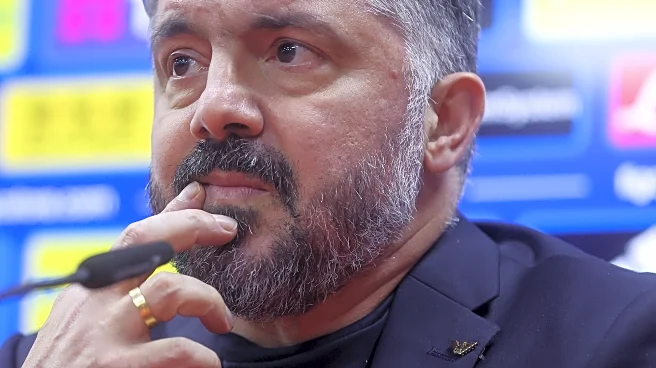
The Italian soccer federation may face significant changes in leadership and strategy. Gabriele Gravina, the current president, has hinted at deeper reflections and possible elections for new leadership. This could lead to a restructuring of the federation's approach to developing talent and managing the national team. The pressure from political figures and the sports community may accelerate these changes, aiming to revitalize Italian soccer and improve its competitiveness on the world stage.