


What's Happening?
A year after the implementation of significant tariffs by President Trump, American businesses and consumers continue to experience economic uncertainty. The tariffs, which targeted major trading partners such as China and the European Union, led to increased
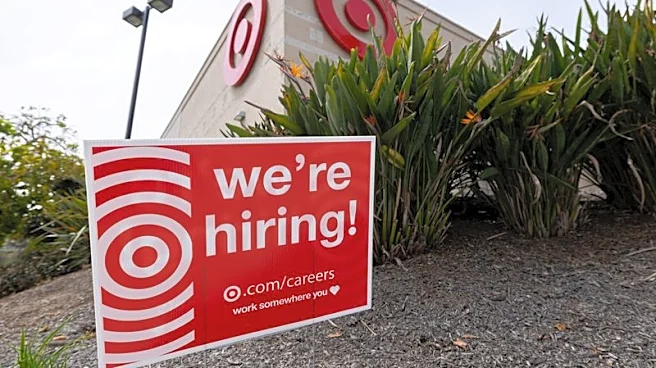
prices for goods, affecting both retailers and consumers. Despite some tariffs being rolled back following a Supreme Court decision, the administration introduced a new 10% global tariff. This has resulted in a fluctuating economic environment where businesses, particularly small ones, face challenges in planning and decision-making. Retailers like Walmart and Target have raised prices, and some consumers have received unexpected 'tariff bills' after online purchases. The tariffs have had a mixed impact on inflation, with some economists noting that other factors, such as supply chain issues, also contribute to price increases.
Why It's Important?
The ongoing uncertainty surrounding tariff policies has significant implications for the U.S. economy. Businesses, especially small enterprises, are struggling to navigate the unpredictable cost environment, which affects their ability to make long-term investments and decisions. The tariffs have not caused the anticipated surge in inflation, but they have contributed to price increases, complicating the Federal Reserve's efforts to manage inflation and interest rates. The tariffs are part of a broader strategy by President Trump to renegotiate trade deals and secure manufacturing investments, but they also risk straining international trade relationships and impacting the global supply chain. The economic instability affects not only businesses but also consumers, who face higher prices for everyday goods.
What's Next?
As the U.S. continues to adjust its trade policies, businesses and consumers will need to adapt to the evolving economic landscape. The Federal Reserve is monitoring inflation and may adjust interest rates in response to ongoing economic conditions. Businesses may need to explore alternative supply chains or adjust pricing strategies to mitigate the impact of tariffs. The administration's trade policies will likely continue to be a point of contention in international relations, with potential for further negotiations or retaliatory measures from affected countries. Stakeholders will be watching for any policy changes or new trade agreements that could provide more stability and predictability in the market.