


What's Happening?
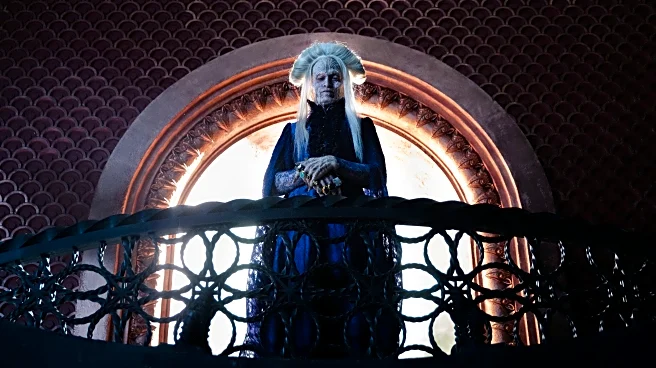
French filmmaker Luc Besson has released a new adaptation of Bram Stoker's 'Dracula,' starring Caleb Landry Jones. The film, titled 'Dracula: A Love Tale,' presents a highly stylized and CGI-heavy interpretation of the classic vampire story. Besson's version connects Count Dracula to the French Revolution, portraying him as a lovesick warrior pursuing his deceased wife across centuries. The film features a subplot involving Dracula's creation of a perfume in Florence, adding a unique twist to the narrative. Despite its visual flair, the film is overshadowed by Besson's personal controversies, including past accusations of sexual misconduct.
Why It's Important?
The release of Besson's 'Dracula' highlights ongoing discussions about separating art from the artist,
especially when the creator is embroiled in controversy. The film's portrayal of Dracula as a romantic figure may be seen as problematic given Besson's history, raising questions about the ethical responsibilities of filmmakers. Additionally, the film's unique take on a well-known story reflects the enduring appeal and adaptability of classic literature in modern cinema. This adaptation could influence future interpretations of 'Dracula' and similar works, impacting how filmmakers approach classic narratives.
What's Next?
As 'Dracula: A Love Tale' enters wide release, it will be important to monitor audience and critical reactions, particularly in light of Besson's controversial past. The film's reception could affect Besson's career and influence how studios handle projects involving directors with similar backgrounds. Additionally, the film's unique narrative choices may inspire other filmmakers to explore unconventional adaptations of classic stories, potentially leading to a trend of reimagining literary works with modern sensibilities.
Beyond the Headlines
Besson's 'Dracula' raises broader cultural questions about the portrayal of historical figures and myths in contemporary media. The film's romanticization of Dracula, a character traditionally seen as a villain, reflects a shift in how audiences engage with complex characters. This trend towards nuanced portrayals could lead to more diverse and multifaceted storytelling in film and television, challenging traditional narratives and encouraging viewers to reconsider their perceptions of classic characters.