






What's Happening?
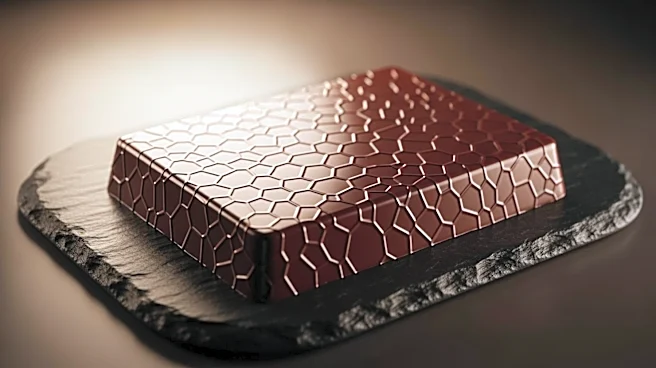
Mondelēz International, in collaboration with Israeli start-up Celleste Bio, has developed the world's first cell-based chocolate bar. This innovative product uses lab-grown cocoa butter, produced through cell suspension culture technology, which allows
cocoa butter to be cultivated from a single cocoa bean. The process involves extracting cells from the bean, fermenting them with water, sugar, and vitamins, and then harvesting the biomass to create cocoa butter. This method aims to address challenges in the cocoa industry, such as aging farms, climate disruption, and price volatility. Celleste Bio plans to have its cell-based cocoa butter market-ready by 2027, although consumer acceptance remains uncertain.
Why It's Important?
The development of cell-based chocolate represents a significant advancement in food technology, potentially revolutionizing the cocoa industry. By reducing reliance on traditional cocoa farming, this innovation could mitigate the effects of climate change and disease on cocoa production. It also offers a sustainable alternative to conventional methods, which are increasingly strained by environmental and economic pressures. If successful, this technology could lead to more stable cocoa prices and reduce the industry's vulnerability to external factors. However, the acceptance of lab-grown cocoa by consumers will be crucial for its commercial success.
What's Next?
Celleste Bio is moving from lab to pilot scale, with plans to finalize a 1,000-litre pilot facility. The company is preparing regulatory dossiers for approval in the US, EU, Israel, and the UK. The next steps involve scaling production and securing pre-market approval, which will determine the timeline for commercial availability. The broader food industry will be watching closely to see if cell-based cocoa can gain traction and whether it will influence other sectors to adopt similar technologies.