

What's Happening?
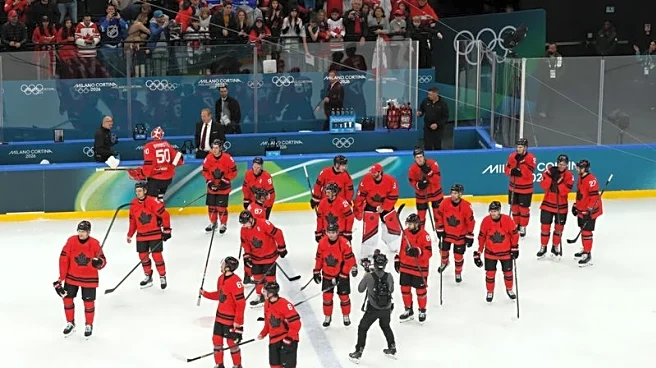
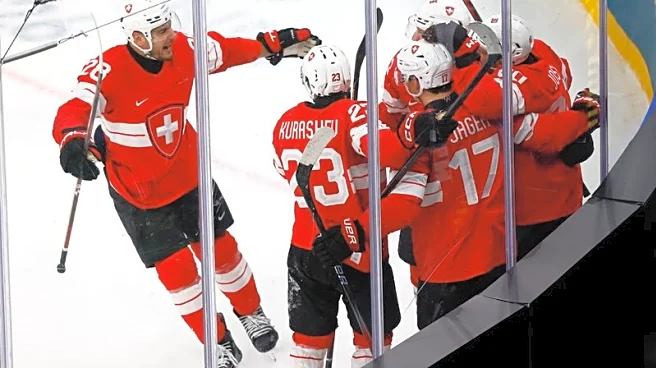
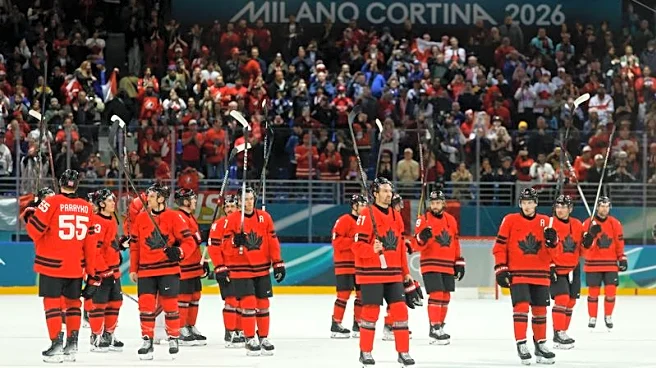
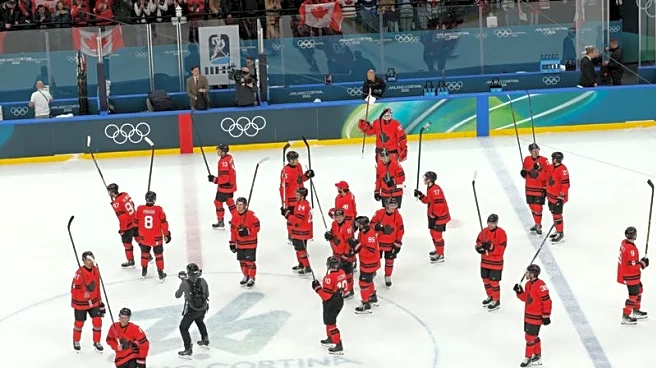
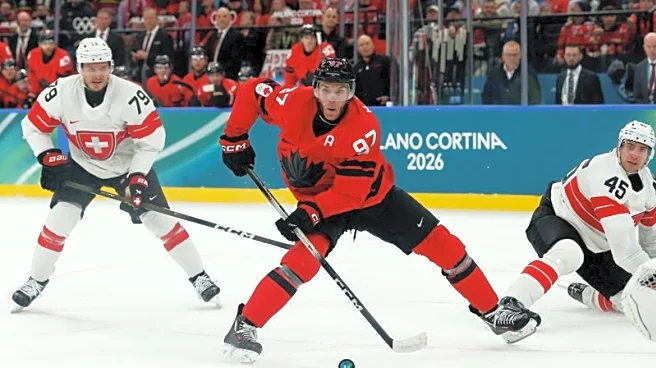
The Olympic Men's hockey tournament is underway, with Canada and the United States securing top positions in their respective groups. Canada defeated France 10-2, with standout performances from Connor McDavid, Sidney Crosby, and Macklin Celebrini. Crosby set a new Canadian record for most Olympic points by an NHL player. The United States also performed strongly, defeating Germany 5-1, with Auston Matthews scoring twice. However, the tournament has not been without challenges, as several NHL players have sustained injuries. Kevin Fiala of Switzerland suffered a season-ending leg injury, impacting his NHL team, the Los Angeles Kings. The preliminary round has concluded, with Canada, the United States, Finland, and Slovakia earning byes to the quarterfinals.
Why It's Important?
The Olympic Games provide a global stage for athletes, but they also pose risks for NHL teams whose players participate. Injuries like Kevin Fiala's can significantly impact NHL teams' performance and strategies, as they lose key players for the remainder of the season. The tournament also highlights the intense competition and the high stakes involved, as players strive for national glory while balancing their professional commitments. The performance of players like Crosby and Matthews not only boosts their national teams but also enhances their reputations in the NHL, potentially affecting their market value and career trajectories.
What's Next?
As the tournament progresses to the quarterfinals, teams will need to adjust their strategies to account for player injuries and the intense competition. NHL teams will closely monitor their players' performances and health, as any further injuries could have long-term implications for their season. The qualification playoff games will determine the remaining quarterfinalists, adding another layer of excitement and unpredictability to the tournament. NHL teams may also need to consider roster adjustments or strategic changes to mitigate the impact of player absences due to injuries sustained during the Olympics.