
What's Happening?
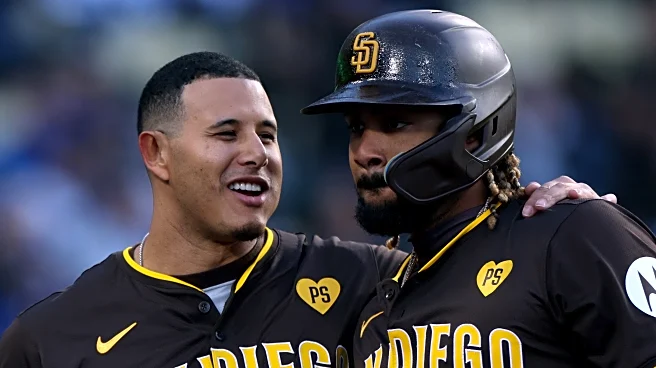
Miguel Rojas, an infielder for the Los Angeles Dodgers, recently addressed an erroneous report that mistakenly identified him as the recipient of an 80-game suspension for using a banned substance. The report, initially posted by a senior baseball writer
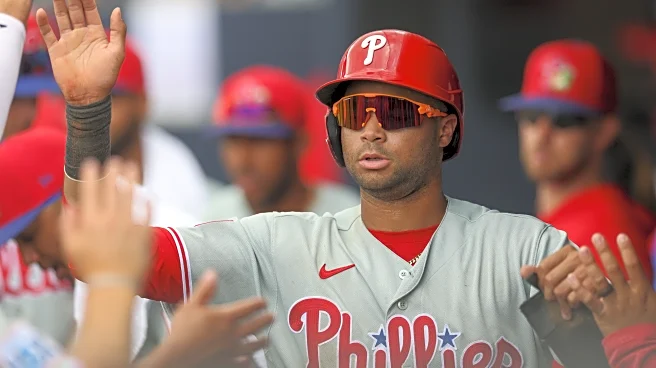
at The Athletic, incorrectly named Rojas instead of the actual player, Phillies outfielder Johan Rojas, who tested positive for Boldenone. The writer, Evan Drellich, quickly deleted the post and issued a correction. Rojas expressed his understanding of the mistake but emphasized the need for a more comprehensive apology, not just to him but to the Dodgers organization as well. He highlighted the importance of the organization's reputation and the unnecessary alarm caused by the error. Drellich later issued a public apology to Rojas, the Dodgers, and Rojas' agent.
Why It's Important?
This incident underscores the critical role of accuracy in sports journalism and the potential repercussions of misinformation. For professional athletes and their teams, reputational damage can have significant consequences, affecting public perception and potentially impacting team dynamics. The swift correction and apology by the journalist highlight the importance of accountability in media reporting. This situation also reflects the broader challenges faced by public figures in managing their image amidst the rapid dissemination of information on social media platforms. The Dodgers, as a high-profile sports organization, must navigate these challenges to maintain trust with their fans and stakeholders.
What's Next?
While the immediate issue has been addressed with a public apology, the incident may prompt discussions within sports journalism about the verification processes before publishing sensitive information. The Dodgers and other sports teams might consider implementing strategies to mitigate the impact of similar situations in the future, such as enhancing communication protocols with media outlets. Additionally, this event could lead to increased awareness among athletes about the importance of managing their public image and the potential need for media training to handle such situations effectively.