
What's Happening?
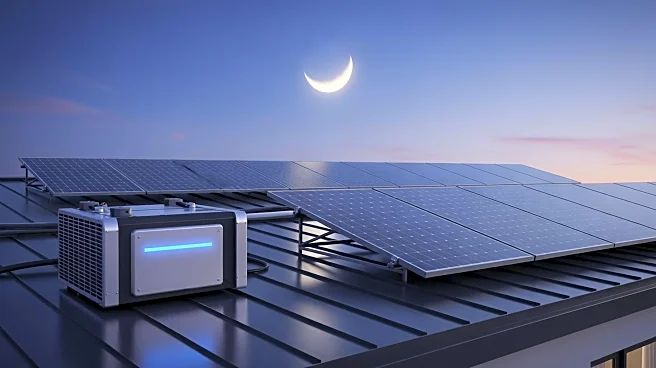
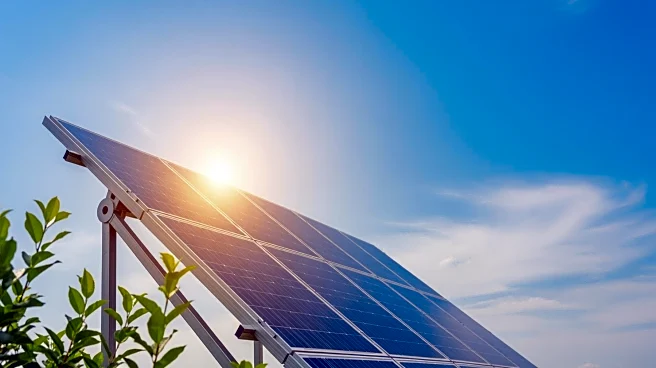
Elon Musk made a surprise appearance at the World Economic Forum in Davos, where he discussed Tesla's future, self-driving technology, and the company's mission of 'sustainable abundance.' Musk revealed plans for Tesla to produce 100 gigawatts of solar power annually in the U.S. within three years, marking a significant increase in domestic solar production. He also provided updates on Tesla's Optimus humanoid robot, which is currently performing simple tasks in factories, with more complex work expected soon. Musk expressed confidence in Tesla's self-driving technology, stating it is a 'solved problem' and anticipates regulatory approval in Europe soon.
Why It's Important?
Musk's statements at Davos highlight Tesla's ambitious goals in renewable energy and automation,
reflecting the company's commitment to advancing sustainable technologies. The focus on solar power production aligns with global efforts to reduce carbon emissions and transition to cleaner energy sources. The development of self-driving technology and humanoid robots represents significant advancements in AI and automation, with potential implications for various industries. Musk's confidence in overcoming regulatory hurdles suggests a future where autonomous vehicles and robots play a more prominent role in society.
What's Next?
Tesla's plans for increased solar power production and the rollout of self-driving technology will likely face scrutiny from regulators and industry stakeholders. The company's progress in these areas could influence policy decisions and shape the competitive landscape in renewable energy and autonomous vehicles. As Tesla continues to innovate, other companies may follow suit, driving further advancements in technology and sustainability. The success of Tesla's initiatives could set new standards for the industry, impacting how businesses approach energy production and automation.