





What's Happening?
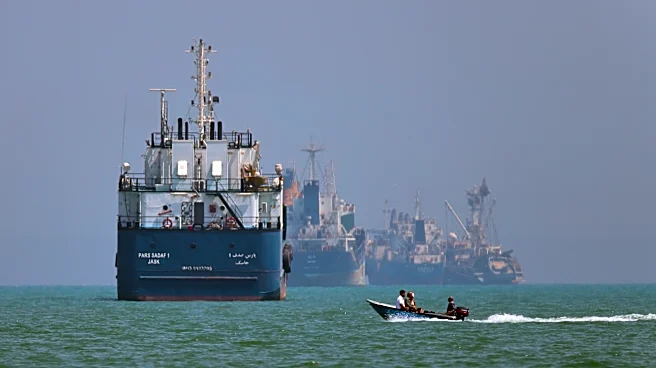
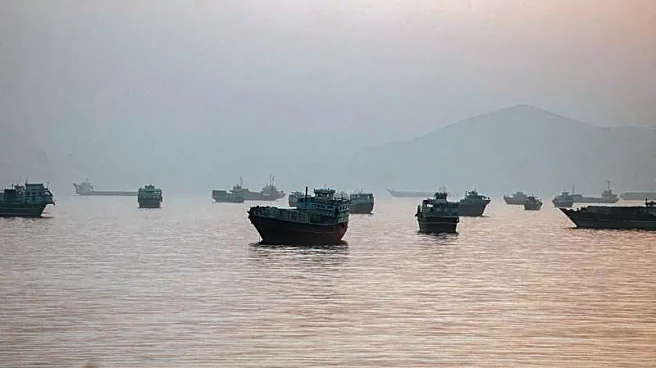
U.S. Energy Secretary Chris Wright announced that approximately 7 million barrels of oil are being exported daily from the Persian Gulf, a significant recovery facilitated by U.S. military intervention. This figure represents about half of the oil volumes
previously stranded due to disruptions at the Strait of Hormuz, a critical chokepoint affected by ongoing conflict in Iran. Wright's statement was made during a Bloomberg energy event in Houston, where he credited the U.S. military for ensuring the safe passage of oil tankers, some of which are reportedly turning off their transponders to avoid detection. However, Chevron CEO Mike Wirth challenged Wright's estimate, suggesting that the actual volumes are lower. Wirth noted that while oil flows have increased, they do not match the 7 million barrels per day claimed by Wright. The U.S. aims to maintain oil exports from the Gulf while enforcing a blockade on Iranian oil until a peace agreement is reached.
Why It's Important?
The discrepancy in oil flow estimates between the U.S. Energy Secretary and Chevron's CEO highlights the complexities and uncertainties in global oil markets amid geopolitical tensions. The U.S. military's role in securing oil shipments underscores the strategic importance of the Persian Gulf in global energy supply chains. The ongoing conflict in Iran has disrupted nearly 20% of the world's oil flows, prompting countries like Saudi Arabia and the UAE to reroute oil through pipelines. The situation has significant implications for global oil prices, which have fluctuated due to these disruptions and the release of U.S. Strategic Petroleum Reserve (SPR) stocks. The depletion of the SPR to its lowest levels since 1983 raises concerns about long-term energy security and the ability to respond to future crises. The U.S. administration's decision to potentially extend the Jones Act waiver could further impact domestic oil logistics and supply.
What's Next?
The U.S. government may consider extending the Jones Act waiver beyond mid-August to facilitate the movement of oil between domestic ports, which could help alleviate regional supply shortages. The ongoing depletion of the SPR suggests that the U.S. will need to replenish its reserves, a process that could affect future oil market dynamics. As the conflict in Iran continues, the global oil market remains vulnerable to further disruptions, and any delay in reaching a peace agreement could exacerbate supply challenges. The U.S. and its allies will likely continue diplomatic efforts to stabilize the region and secure energy supplies. Additionally, the oil industry will need to adapt to these geopolitical shifts, potentially accelerating investments in alternative energy sources and infrastructure resilience.