






What's Happening?
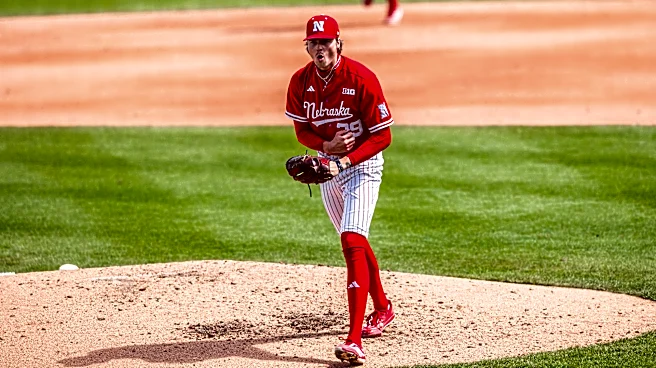
The College Sports Commission (CSC) has secured a significant arbitration victory by affirming its decision to reject Name, Image, and Likeness (NIL) deals between Nebraska football players and Playfly Sports. This ruling validates the CSC's authority
to classify the school's multimedia rights partner as an 'associated entity' under the House v. NCAA settlement, thereby barring such deals. The arbitration decision, which is the first of its kind since the NIL Go platform's launch in June 2025, affects deals worth over $1 million. Despite this win, Jeffrey Kessler, lead counsel for the House plaintiffs, argues that the broader issue of the CSC's enforcement reach remains unresolved. A separate legal challenge is set to take place in a California courtroom later this month, where the interpretation of 'associated entities' under the House settlement will be scrutinized.
Why It's Important?
This arbitration ruling is pivotal as it tests the boundaries of the CSC's enforcement capabilities under the House settlement. The decision could set a precedent for how NIL deals are managed and regulated, impacting student-athletes, universities, and associated entities involved in collegiate sports. The outcome of the upcoming court case could either reinforce or challenge the CSC's authority, potentially leading to a reevaluation of NIL deal structures and compliance requirements. This situation underscores the ongoing tension between regulatory bodies and the evolving landscape of college sports, where financial interests and athlete rights are increasingly at the forefront.
What's Next?
The next phase of this legal battle will unfold in the Northern District of California on May 27, where the court will review the CSC's interpretation of 'associated entities' under the House settlement. This decision could have far-reaching implications for the enforcement of NIL deals and the operational framework of the CSC. Nebraska's players are expected to submit new deals for CSC review, with the commission promising expedited processing. The outcome of the court case will likely influence future NIL agreements and the regulatory environment governing collegiate athletics.